Initiatives for "Climate Change"
Yamaha Motor works on solution to issue of climate change through its business activities.
 Contents
- Reduction of CO2 Emissions from Products
- Reduce CO2 Emissions from Business Locations
- Theoretical Value Energy Activities: Global Implementation
- Pursuit of Valuable Energy
- Theoretical Value Energy Activities: Smart Factories Based on Theoretical-Value-Based Production
- Installation of Carport Solar Power Generation Equipment in Employee Parking Lot
- First carbon-neutral painting line in the motorcycle industry begins operation
- Our First Carbon-Neutral Factory Accelerating Decarbonization --Advancing toward carbon neutrality at our own plants through the operation of "Theoretical Value Energy"--
- Hydrogen-related technology demonstration facility 'ZERO BLUE LAB Mimori' begins operation
- Reduction of CO2 Emissions in Distribution
Reduction of CO2 Emissions from Products
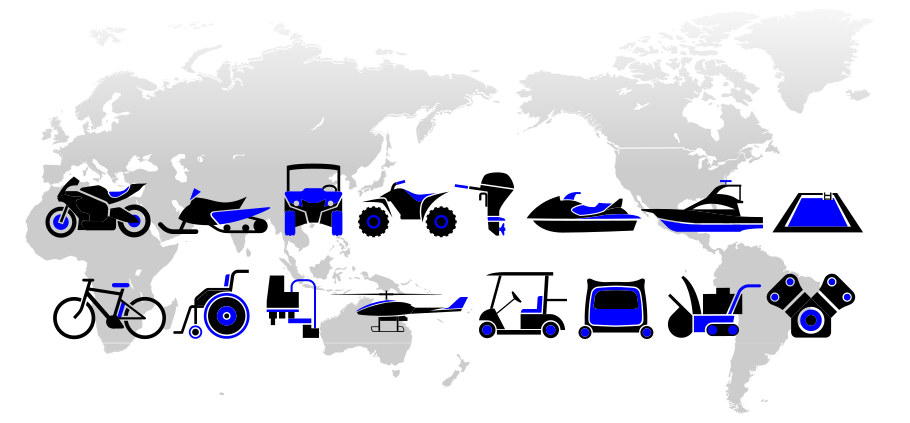
For over 70 years since its founding, Yamaha Motor has used the lightweight, compact, durable and reliable concepts of its Monozukuri (engineering, manufacturing and marketing) as a strength to constantly offer new value and carve out new markets. At sea, on land, in the air. For leisure, for industry, for lifestyles. We provide a diverse range of distinctive products in over 180 countries and territories.
The majority of the Yamaha Motor Group’s CO2 emissions come from the use of its products (Scope 3 Cat. 11). To tackle the issue, we have set up the following four strategic policies to help achieve carbon neutrality when our products are used.
- Improve the fuel efficiency of ICE systems
- Upgrade and expand BEV products
- Expand sales of BEV models
- Develop power trains with carbon neutral fuel capabilities

Improve the fuel efficiency of ICE systems
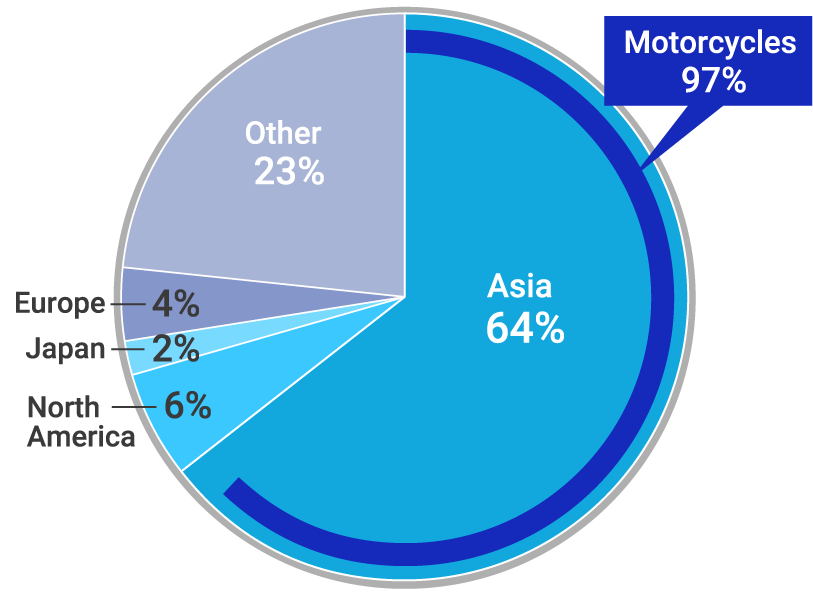
CO2 emissions from product use (Scope 3 Cat. 11) are concentrated in Asia, accounting for over 60% of the total, with motorcycles making up 97% of that amount. In emerging nations, two-wheelers are a cheap and convenient means of transportation for delivery, two-wheeled taxis and commuting to work or school. They also serve an important role as part of the social infrastructure that supports the movement of persons, goods and services. While closely following Nationally Determined Contribution (NDC) targets for greenhouse gas reduction as well as energy policies and regulatory movements in various countries and territories, we will further improve the fuel consumption of ICE-powered motorcycles as one of the affordable and convenient mobility options available. In this way, we will contribute to the economic growth of emerging nations from the standpoint of the SDGs while creating jobs and providing solutions to environmental issues.
Upgrade and expand BEV products
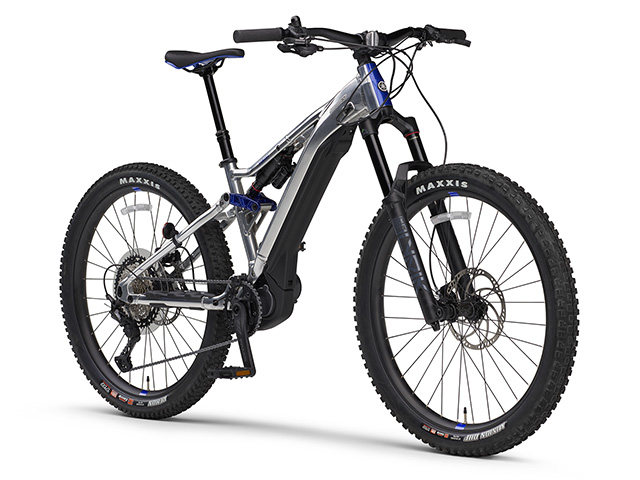
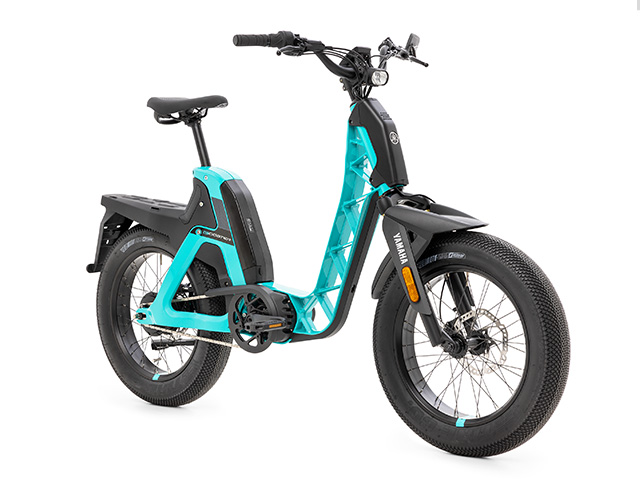
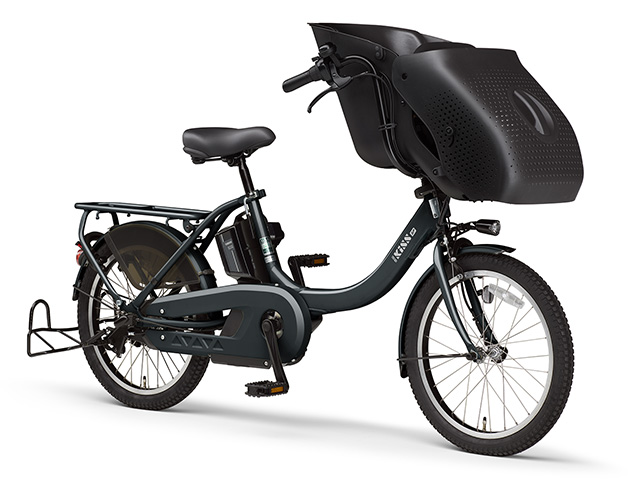
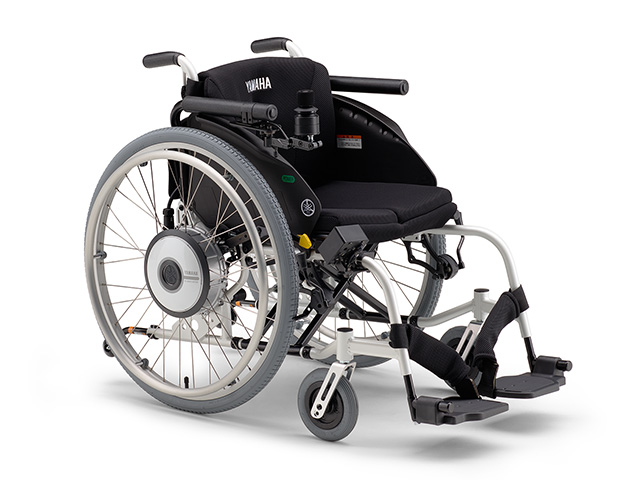
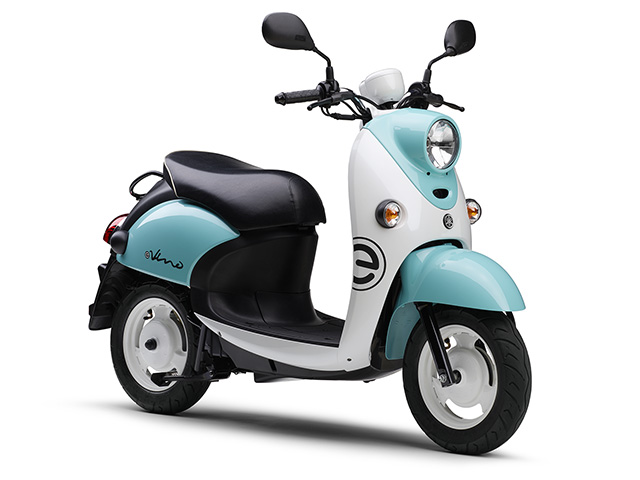
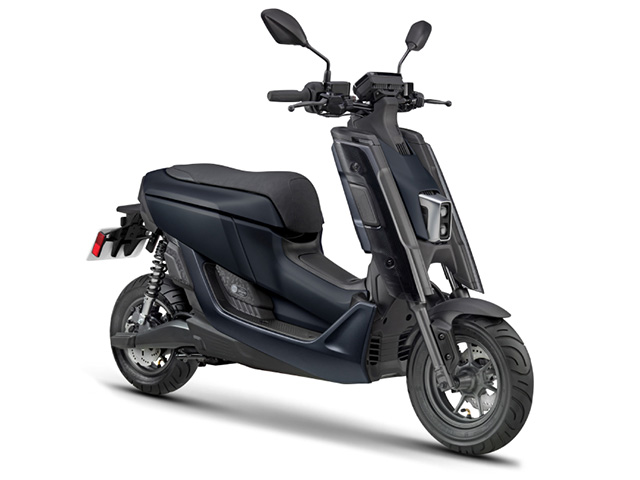
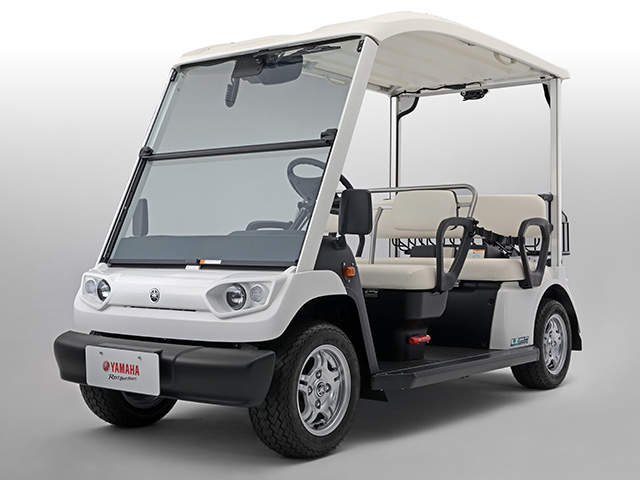
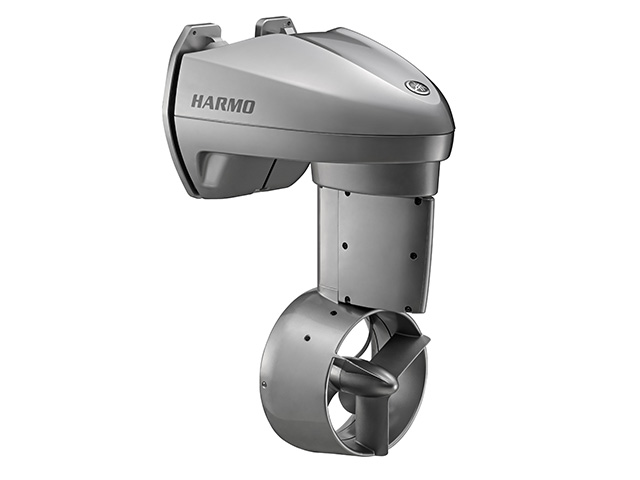
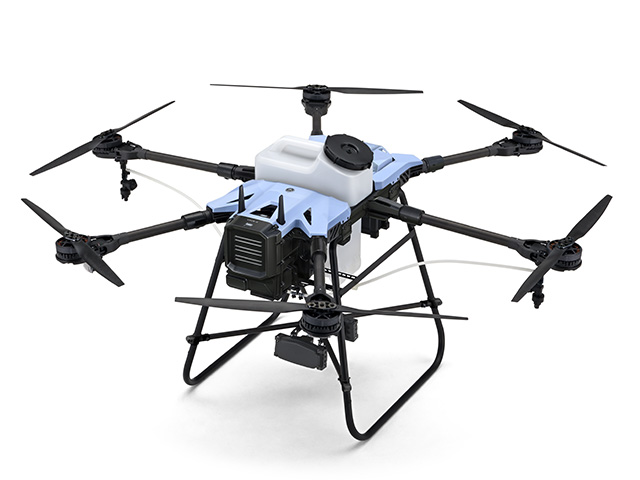
Since the 1980s, we have marked electric power as a potential solution to environmental and energy resource problems, and we have pursued technological research to that end. In 2002, we launched the Passol, the first mass-produced electric scooter. Since then, while keeping the ideal EVs for each region in mind, we have sought to expand the possibilities of mobility and create better lifestyles and societies through the electrification of a diverse range of products including not only two-wheeled vehicles but also electric golf cars, compact low-speed cars (land cars), electrically power assisted bicycles, electric wheelchairs and drones.
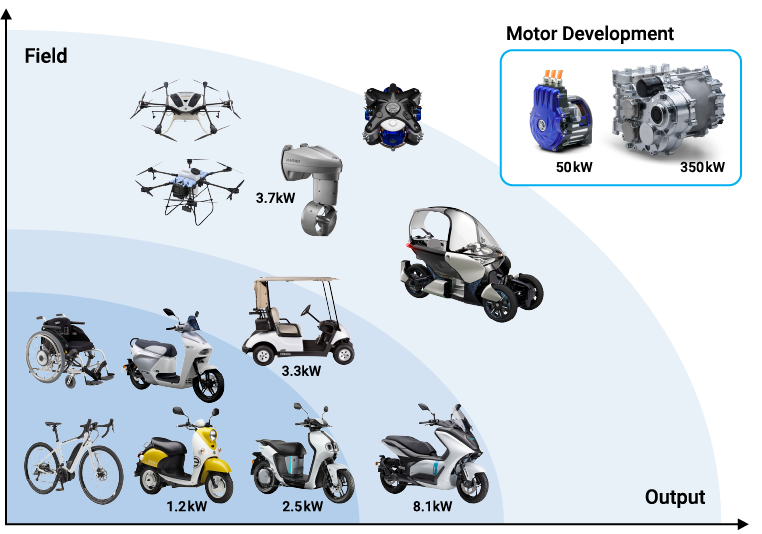
Electrically Power Assisted Bicycles
Electric Wheelchairs
Electric Scooter
Electric golf car
Electric Propulsion Unit
Industrial Multi-rotor
Toward expanding sales of BEV models
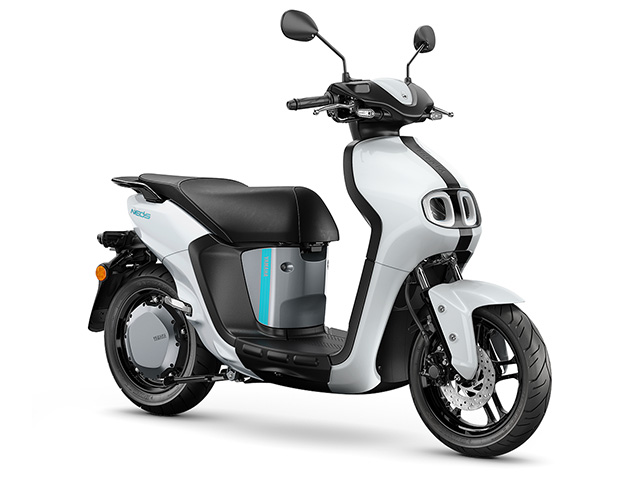
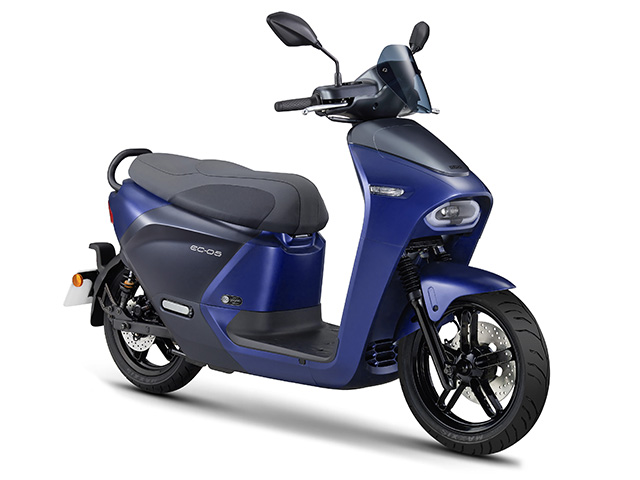
We have set the Groupwide environmental target of achieving carbon neutrality by 2050 for Scope 3, Category 11 “Use of Sold Products” through a multi-pathway approach. The launch of the JOG E in the Japanese market and the AEROX E and EC-06 in the Indian market are part of initiatives toward achieving this Groupwide environmental target.
Launch of the JOG E electric commuter scooter in Japan
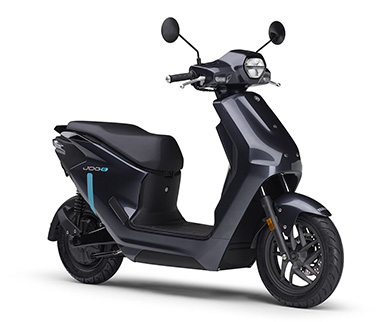
In December 2025, we began limited-area advance sales in Tokyo and Osaka of the JOG E, a production model electric scooter.
The JOG E is a Class-1 electric scooter that is the first Yamaha motorcycle to adopt a swappable battery, using the Honda Mobile Power Pack e as its power source.
Two new electric scooter models for India
In November 2025, we announced two electric scooter models in India: the AEROX E, an electric sports scooter developed by Yamaha Motor, and the EC-06, an electric scooter developed in collaboration with River Mobility Private Limited (Headquarters: Karnataka, India; CEO: Aravind Mani; hereinafter “River”).
The electric sports scooter AEROX E is a high-value-added model aligned with the premium strategy for ASEAN and emerging markets set forth in the Medium-term Management Plan. The EC-06 electric scooter is based on a production model from River and developed for a broader customer base. It features a design suited for stylish and cool active daily riding. Since investing in River in January 2024, we have been considering collaboration with the company for EV business development in the Indian market. The EC-06 is the first product based on this collaboration.
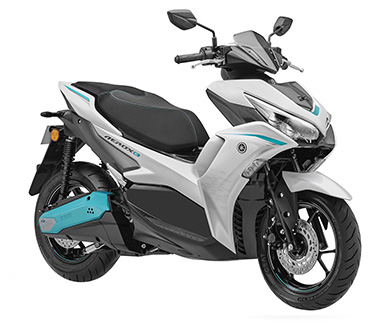
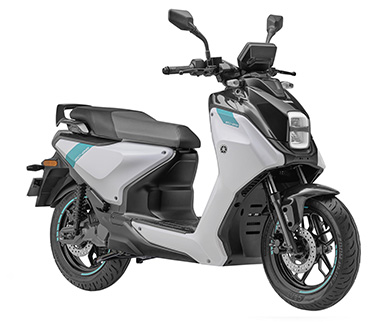
Research and development into powertrain technologies that help to realize carbon neutrality.
As part of our efforts to achieve carbon neutrality, Yamaha Motor is researching and developing powertrain technologies that are compatible with electric motors and with a variety of energy sources such as biofuels, efuels, and other carbon neutral fuels.
αlive RX high-performance range extender unit
Designed with the anticipation that it would be used in compact, lightweight and powerful applications such as in drones, αlive RX is a compact unit that delivers high performance with an estimated 88kW in maximum output.
Replacing some of the batteries in an electric mobility vehicle with this unit can substantially extend the vehicle’s cruising range and operating time.
It is also compatible with next-generation fuels.
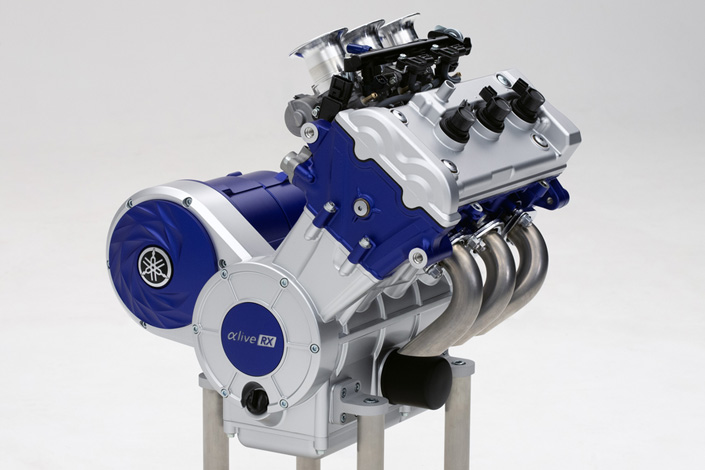
αlive H2E (hydrogen engine)
The αlive H2E is an internal combustion engine that employs existing engine technologies to burn hydrogen and use the energy produced, without emitting CO2.*1
Outside of use in mobility powertrains, hydrogen engines hold great potential for use with machines like generators, making such technology a potential pathway to more means of achieving carbon neutrality.
*1 Does not include the ultratrace amounts of engine oil burned during combustion.
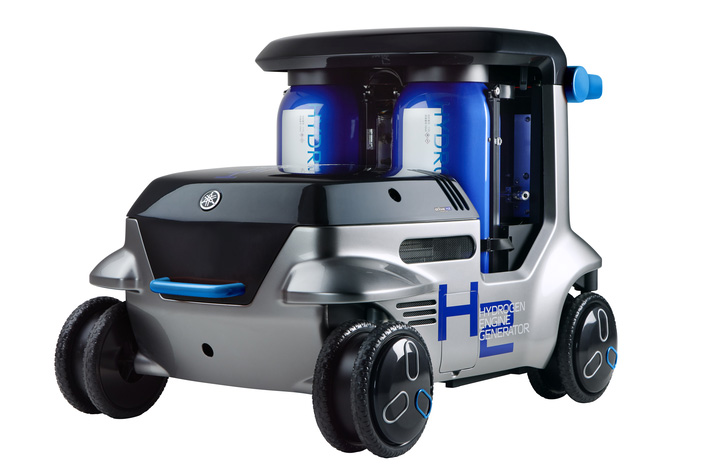
Exhibition of prototype and concept models under development at the Japan Mobility Show 2025
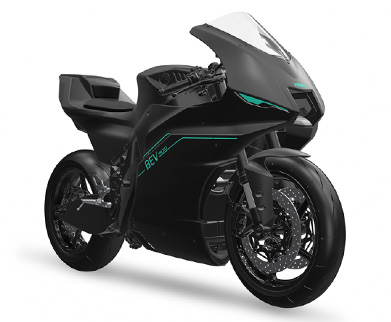
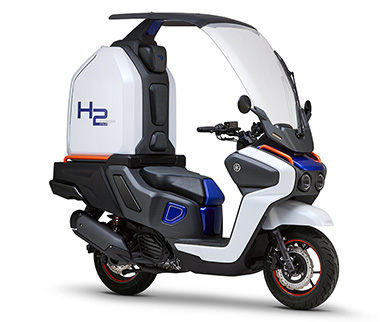
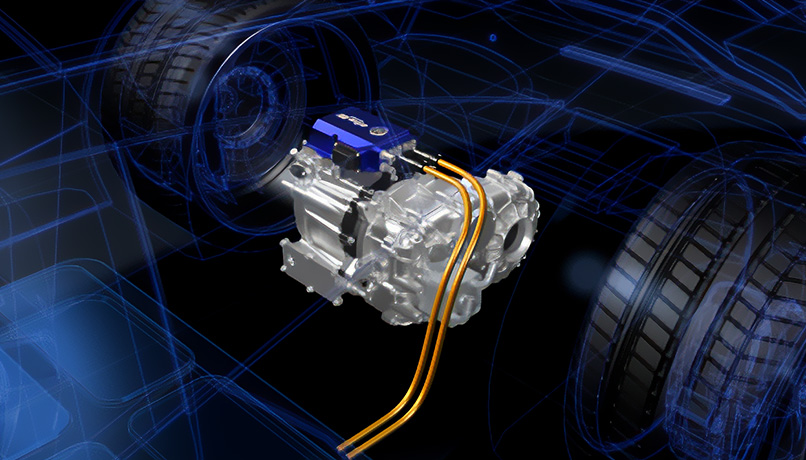
At the Japan Mobility Show 2025 held at Tokyo Big Sight, we exhibited the running prototype model PROTO BEV, which is designed to deliver the kind of fun that only a large-battery EV can offer; the H2 Buddy Porter Concept, a concept model of a hydrogen-engine motorcycle under development as a diverse option toward realizing carbon neutrality; and the e-Axle, an automotive electric drive unit currently under development for supply to automobile manufacturers.
Reduce CO2 Emissions from Business Locations
Among the Yamaha Motor Group’s business sites, many of the major manufacturing sites shown below that are under the jurisdiction of the Manufacturing and Production Engineering Center handle everything in-house, from casting and the processing of steel and aluminum to stamping, welding, forging, heat treating, resin molding, painting, and assembly.
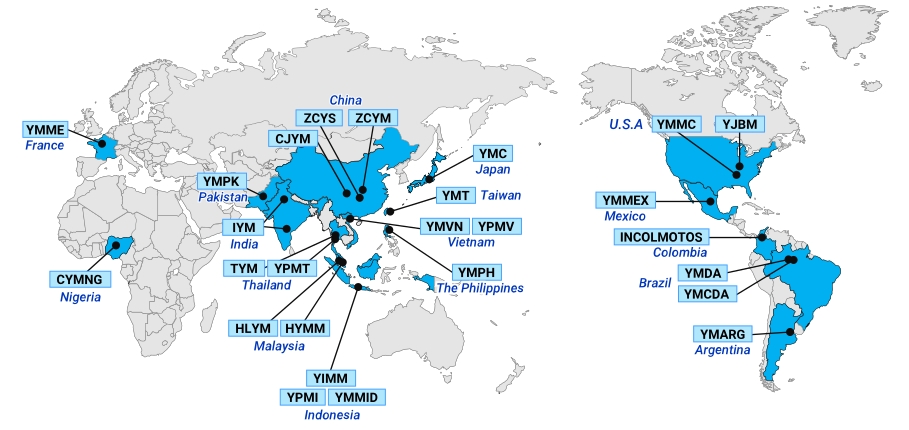
To reduce CO2 emissions from our business locations, we are implementing the following four strategic policies.
Four Strategic Policies
- Theoretical value energy activities
- Expand use of renewable energy at production sites
- Update facilities, reform processes
- Switch from fossil fuels to electricity
Theoretical Value Energy Activities: Global Implementation
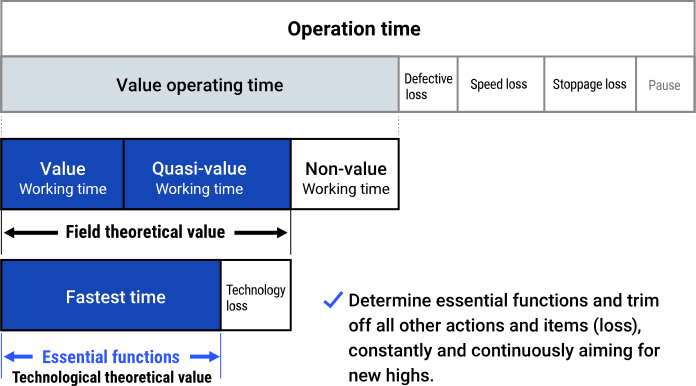
At Yamaha Motor, we are working to reduce CO2 emissions of the entire Group by cooperating with overseas Group companies and sharing energy-saving know-how accumulated within Japan. Specifically, we are implementing a "theoretical value energy" approach, in which we define the value and quasi-value of each facility and process at our production bases in Japan and abroad, identify the essential functions, and aim to minimize loss. To date, we have visited 30 locations in 13 countries, covering 98% of Groupwide CO2 emissions, in our effort to reduce energy loss.
Theoretical Value Energy
In this approach, we pursue energy minimization by defining the energy theoretically required in facilities and processes as "value energy," and thoroughly eliminating quasi-value and non-value areas through improvements in both facilities and operations.
We are implementing this approach at suppliers as well as Group companies in Japan and overseas.
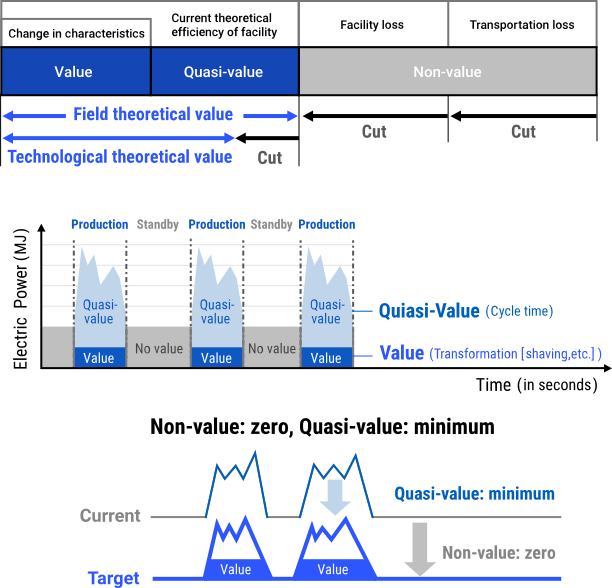
- Pursuit of Valuable Energy -
Yamaha Motor is using the concept of theoretical value energy as a basis for promoting the reduction of CO2. The concept of theoretical value energy sets out four activitysteps, and reduction activities are carried out based on thesesteps.
■ Theoretical value energy activities
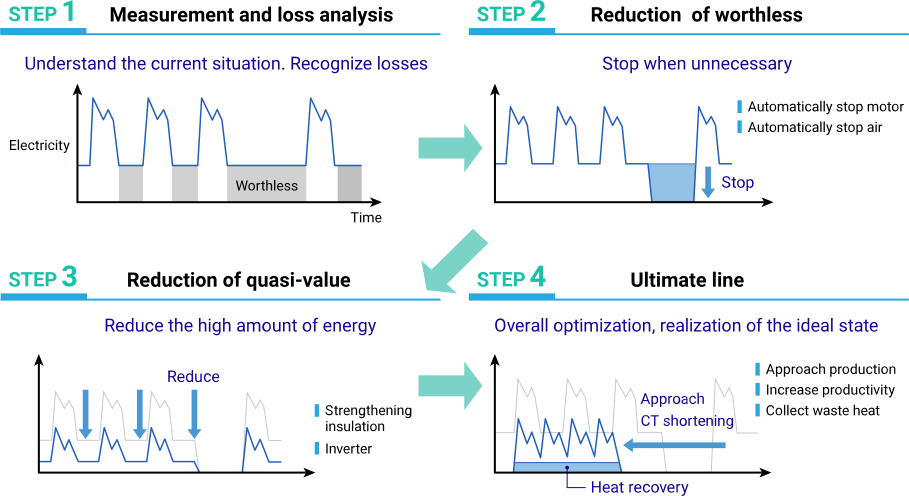
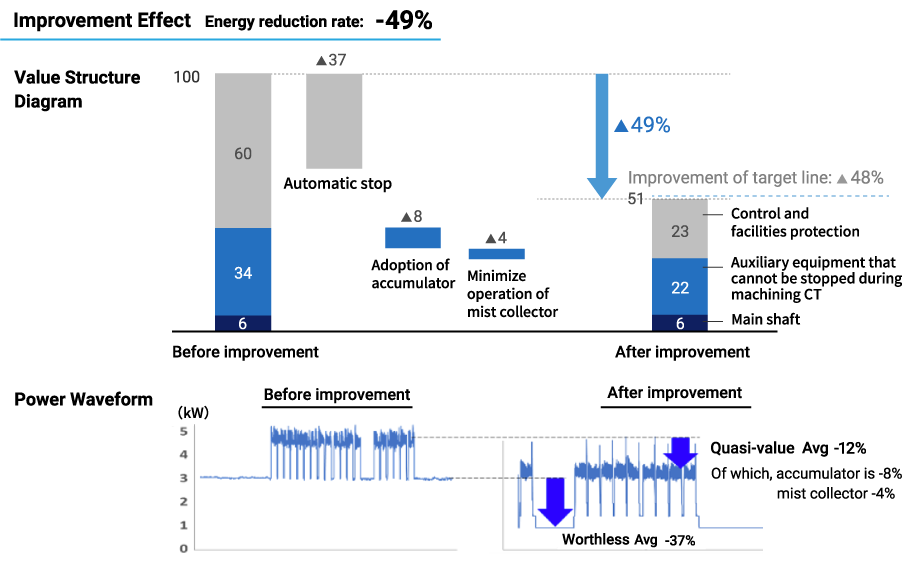
In Step1, the current state of energy for each facility is ascertained and broadly categorized into valuable, quasi-valuable, and worthless. Worthless and quasi-valuable are considered as improvement targets, and valuable energy is pursued.
■ Processing Facilities Energy Value Classification
| Facility Name | Annual Power Consumption [kW] | Valuable Ratio | Quasi-Valuable Ratio | Worthless Ratio |
|---|---|---|---|---|
| Gear cutter 083-621 | 18,298 | 6% | 34% | 60% |
| Gear cutter 183-015 | 17,765 | 7% | 32% | 61% |
| NClathe 097-782 | 16,054 | 16% | 48% | 36% |
| NClathe 097-796 | 12,180 | 21% | 53% | 26% |
| NCmilling cutter 146-005 | 13,175 | 9% | 40% | 51% |
| Barrel polishing 204-A13-40 | 1,995 | 13% | 81% | 6% |
| Engraver 204-A13-30 | 3,940 | 25% | 70% | 5% |
| Chamfering machine 204-A13-20 | 1,558 | 11% | 45% | 44% |
We will thoroughly consider measures to reduce energy other than valuable energy and make improvements.
■ Value Pursuit Minimization of Hydraulic Energy
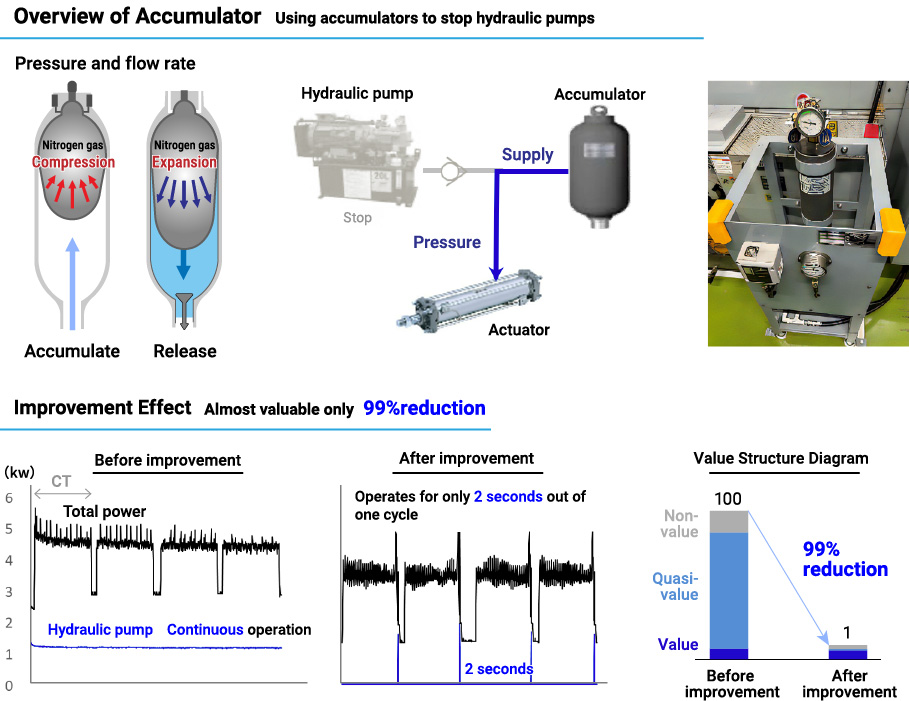
■ Processing Facilities Improvement Results
Theoretical Value Energy Activities: Smart Factories Based on Theoretical-Value-Based Production
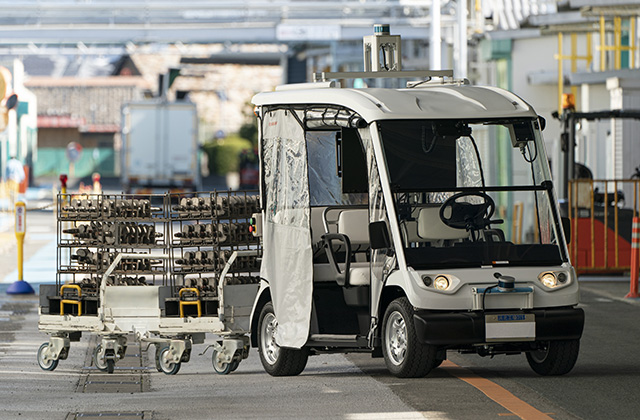
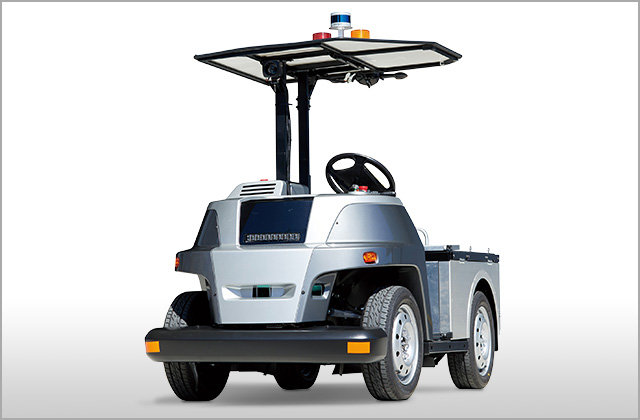
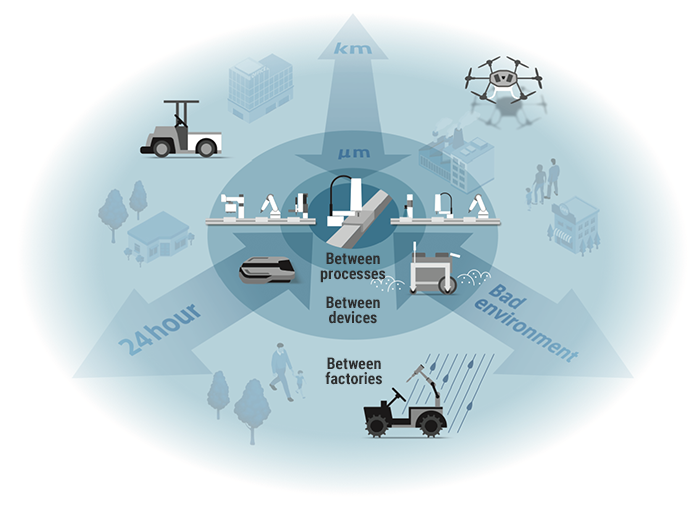
Yamaha Motor is rolling out a smart factory initiative that focuses on time taken by the conveyance tasks and simple tasks that are given a non-value because they do not contribute directly to production in theoretical-value-based production. We are developing a new system of next-generation conveyance connected to linear conveyor modules, compact automatic guided vehicles (AGV) and indoor and outdoor automatic conveyance solutions. These are concepts and technologies that only Yamaha, with its rich experience in robotics and mobility, can conceive of.

Installation of Carport Solar Power Generation Equipment in Employee Parking Lot
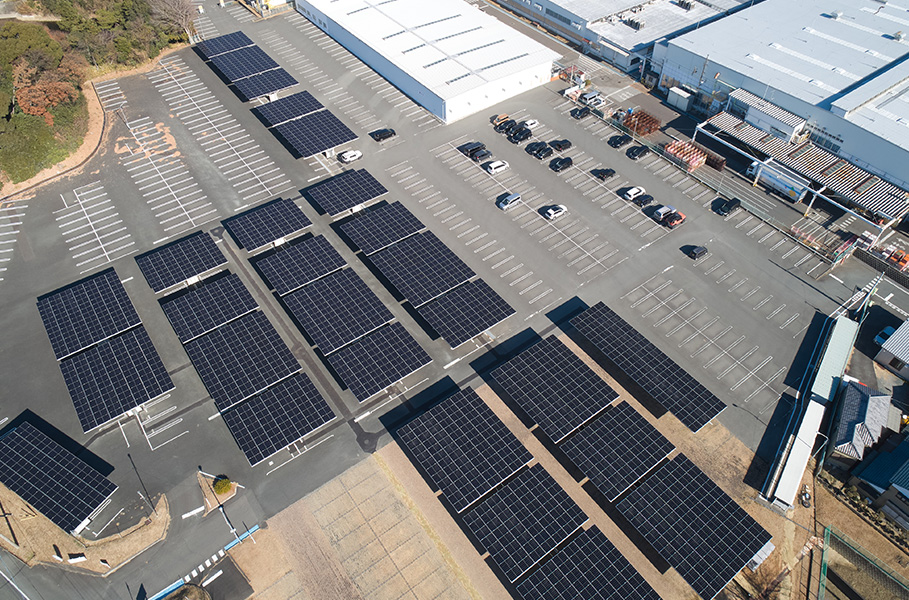
Yamaha Motor has newly installed a “carport solar power generation system (solar panels)” for 270 vehicles in part of the employee parking lot at our Headquarters (Iwata, Shizuoka Prefecture), and has begun power generation and supply since January 2025.
We plan to shift 30% of electricity used to solar power by 2035. In December 2023, we installed a 2,200kW mega solar system on the entire roof of the Fukuroi Minami Factory (Fukuroi, Shizuoka Prefecture), and continue to promote the installation of solar panels at various facility sites.
Yamaha Motor Launches Motorcycle Industry's First Carbon-Neutral Paint Line
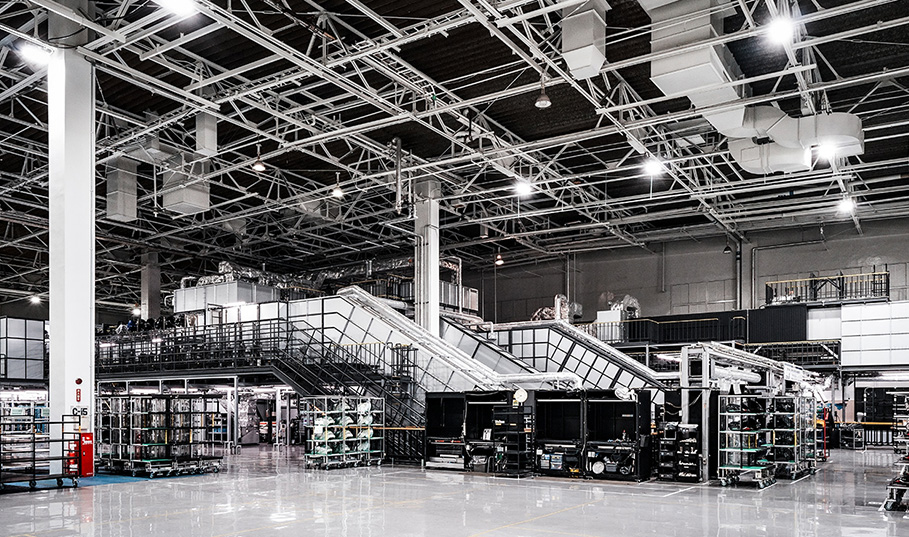
Yamaha Motor Co., Ltd. has newly established the CN1 carbon-neutral mass-production painting line at its Iwata Main Factory, and began painting motorcycle fuel tanks on February 20, 2025. The new painting line uses electricity for all processes that previously used fossil fuels, including pre-treatment, painting, baking, and drying. CN1 is also the motorcycle industry's first all-electric product painting line in operation (according to Yamaha Motor research).
Conventional painting lines use fossil fuels for each process, such as heating paint and other liquids, heating and humidifying the paint booth, and baking and drying. However, the new CN1 painting line achieves all-electric operation by combining and clearing a variety of technical requirements, such as paints usable at lower temperatures developed together with a paint manufacturer, a compact facility design, and new insulation and air supply recycling technologies.
The new line contributes to a simpler preparation process that shortens manufacturing lead times, improves high-mix low-volume production capabilities, enables traceability for individual parts, provides a more comfortable working environment that makes line work easier, and more.
Our First Carbon-Neutral Factory Accelerating Decarbonization --Advancing toward carbon neutrality at our own plants through the operation of "Theoretical Value Energy"--
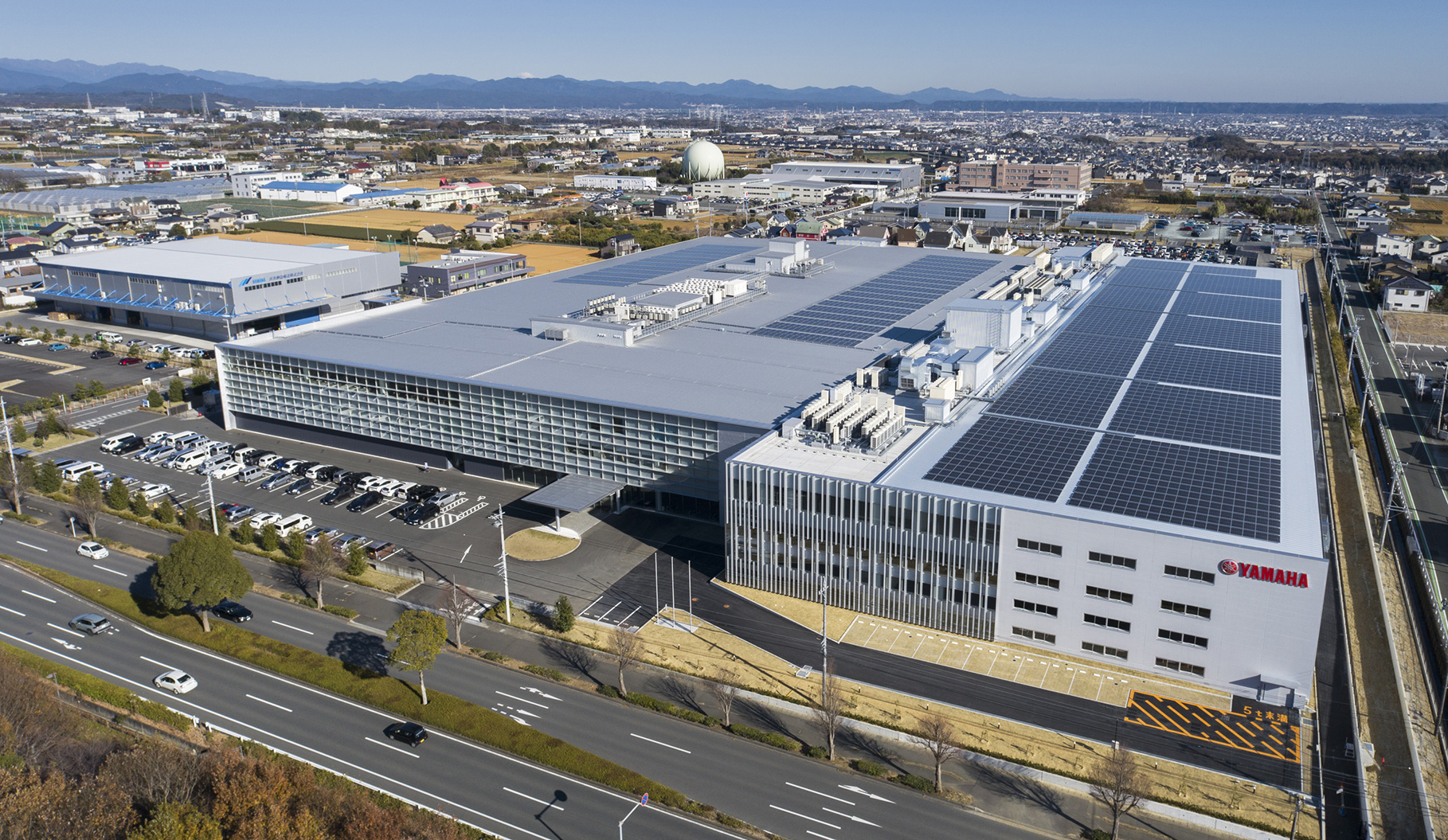
We have set a target of achieving carbon neutrality at our own factories by 2035 including overseas sites and are accelerating our efforts to realize a decarbonized society. As one of the steps toward this goal, we have begun operations at our Hamamatsu Robotics Plant (photo on cover), which is our first plant to achieve carbon neutrality.
The cornerstones of our approach to carbon neutrality are "minimization" and "cleanliness" of energy consumption. "Minimization" is an activity to reduce the absolute amount of energy consumption based on our original "Theoretical Value Energy" concept. On the other hand, "clean energy" is an activity to switch to cleaner energy through the introduction of renewable energy generation facilities and CO2 free electricity. Furthermore, with regard to fossil-based energy, we are also hurrying to shift to alternative energy sources such as hydrogen and electricity in what are called high-temperature processes, such as casting and painting.
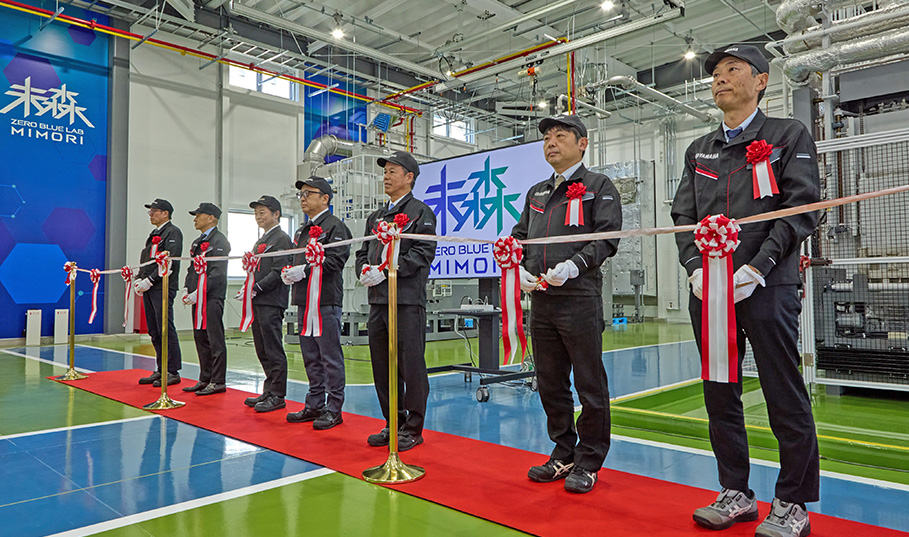
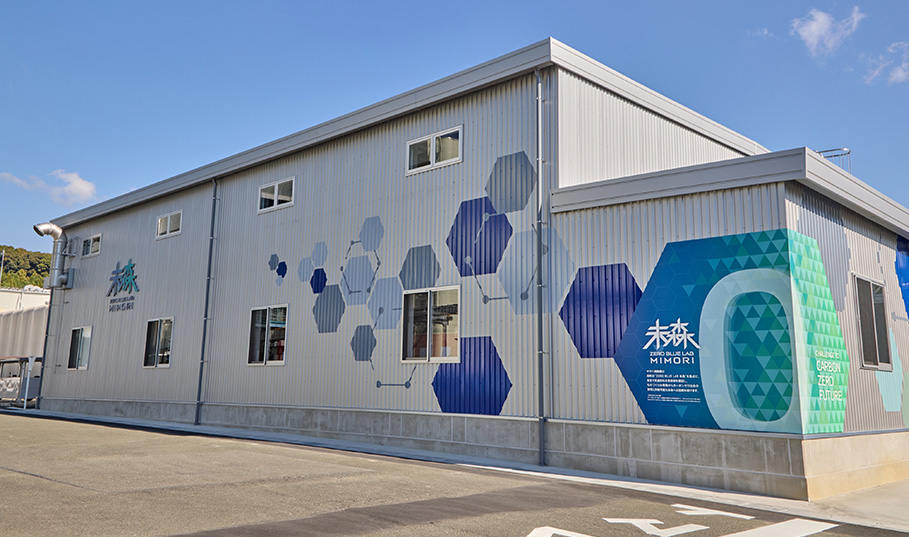
Hydrogen-related technology demonstration facility 'ZERO BLUE LAB Mimori' begins operation
We newly established ZERO BLUE LAB Mimori, a demonstration facility for hydrogen-related technologies, in Mori Town, Shuchi District, Shizuoka Prefecture. Operations at the lab commenced on November 14, 2025. The name Mimori combines the characters for “future” (未) and “local forest” (森), reflecting the Group’s aspiration to take on challenges for a brighter future while growing together with the local community. This facility is positioned as part of efforts to minimize Scope 1 emissions through reducing CO₂ emissions from manufacturing processes.
ZERO BLUE LAB Mimori is equipped with melting furnaces and heat-treatment furnaces compatible with hydrogen gas. Through demonstration testing using these facilities, we plan to expand these technologies throughout the Yamaha Motor Group. Furthermore, from 2026 onward, the Company plans to introduce facilities for producing low-cost green hydrogen and methanation* equipment that converts CO2 in exhaust gas into synthetic methane. Through these initiatives, we will establish more comprehensive carbon neutrality technologies.
*Methanation: A technology that uses catalysts to generate synthetic methane from CO2 and Hydrogen
Another project which will be conducted at ZERO BLUE LAB Mimori is the CO2 Recovery System, which is being jointly developed through collaboration among five companies from different industries. Completion of the large-scale system and a feasibility study (FS) are scheduled for the end of July 2027.
Reduction of CO2 Emissions in Distribution
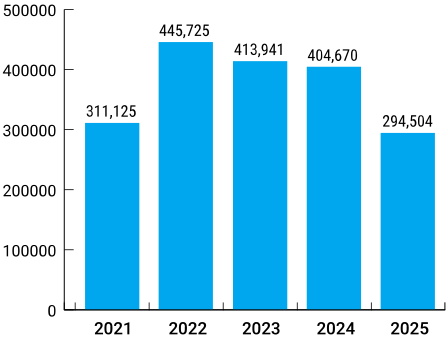
We are working to improve transportation efficiency with the aim of reducing CO2 emissions from distribution operations. We are also taking active steps to monitor CO2 emissions from distribution operations at overseas locations in a Groupwide effort to promote reduction activities. In 2025, 294,504 tons of CO2 were emitted globally from distribution operations.
Monitoring CO2 Emissions from Distribution Operations at Overseas Locations