
Human Capital Management
We introduce our approach and initiatives related to human capital management.
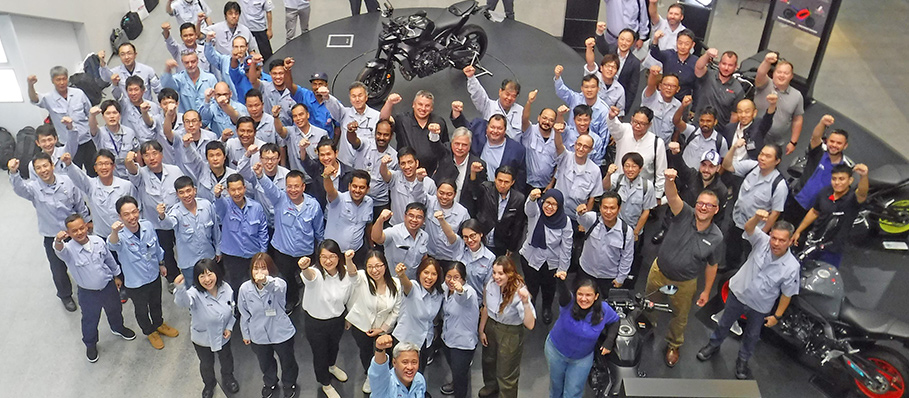
In addition to creating an organizational structure that can respond promptly to changing and evolving market needs, from a global perspective, we aim to continually create Kando through individuals and companies sharing lofty ambitions and cooperating to develop the business and help individuals grow. We are also striving to create workplaces where diversity is respected.
 Contents
- Basic Approach to Human Capital
- Governance
- Creating Work-Friendly Environments for Individuals Where Diversity is Accepted
- Utilizing Global Human Resources
- Human Resource Development
- Employee Engagement
- Preventing Harassment
- Promoting Employment and Raising Motivation for People with Disabilities
- Supporting Work-Life Balance
- Occupational Health and Safety
- Initiatives for Health Management with Safety and Health First
- Promotion Structure
- Priority Areas
- ① Occupational Safety: Fostering a Safety Culture Aimed at Zero Occupational Accidents
- ② Physical Health: Strengthening Measures Against Lifestyle-Related Diseases and Promoting Anti-smoking
- ③ Mental Health: Promoting Mental Healthcare and Early Response
- ④ Work Style Reform: Correcting Long Working Hours and Enhancing Work Engagement
- ⑤ Other Key Initiatives and Distinctive Efforts
- Health and Productivity Management Strategy Map and Effectiveness Measurement
- Relationship with Labor Union
- Addressing Overseas Labor Risks
- Employee: Related Data
Basic Approach to Human Capital
As we develop our businesses globally, in addition to creating an organizational structure that can respond promptly to changing and evolving market needs, we believe that we are continually creating Kando* by having individuals and companies share lofty ambitions and cooperate to develop the business and help individuals grow. We define our vision for human resources as follows.
- Human resources who strive independently and autonomously to increase their personal value.
- Human resources who are able to act with a focus on teamwork.
- Human resources who will increase the value of the Yamaha brand.
We implement human resources strategies linked to business strategies in order to effectively recruit, develop, evaluate, compensate, and assign personnel with the above qualities.
Governance
To further strengthen governance and optimize strategy in human capital management, we established the Human Capital Management Committee, which is chaired by the Chief General Manager of the Human Resources & General Affairs Center. This committee, composed of executive officers and overseas location leaders, actively discusses major global human capital issues such as human resource investment strategies, enhancing engagement, and promoting diversity. We have set up a Talent Management Committee (also chaired by the Chief General Manager of the Human Resources & General Affairs Center) to hold deliberations on human resource development plans, assignments and development statuses when it comes to candidates for management positions in the Yamaha Motor Group. Through these means, we will increase employees’ autonomy over their careers while increasing the transparency of future career paths.
Creating Work-Friendly Environments for Individuals Where Diversity is Accepted
We established the Yamaha Motor Group Diversity, Equity, and Inclusion (DE&I) Policy in September 2023 and shared this policy at our workplaces and subsidiaries, in order to foster an organizational culture where diverse human resources gather and utilize new realizations and discoveries to create value while respecting different viewpoints and values. The focus of the statement is “creating Kando via diversity” as stated in the policy, and its guiding principle is “RESPECT.” (respect, period). “RESPECT.” means that everyone at the Yamaha Motor Group is responsible for interacting with colleagues, customers, suppliers, and other stakeholders with a recognition that the opinions and rights of others have value. Based on that, we have defined focus areas and the Yamaha Motor Group’s position on those areas as we strive to create a workplace where all employees and executives are free to demonstrate their individualities (strengths, experiences, and ideas) to the fullest, regardless of age, gender, sexual orientation, sexual identification, disability, nationality, race, religion/belief, values, or experience.
In particular, with respect to gender-related initiatives, the Group has positioned the promotion of women’s active participation as one of its materialities and has set a target of achieving a 13% ratio of female managers across the Group by 2027. As a step toward achieving this target, the Japan headquarters newly introduced career training programs for female managers, managerial candidates, and their supervisors. Through these programs, participants articulate their strengths and values and develop concrete future career plans through dialogue with supervisors, enhancing their recognition of expected roles and willingness to take on challenges.
In the cross-company mentoring program, executive officers serve as mentors and female department managers serve as mentees. This promotes learning from different positions and external corporate perspectives. Through these initiatives, we support the creation of growth opportunities and the formation of ongoing networks, promoting the development and active participation of female leaders. The Group will continue steadily implementing initiatives toward achievement of its targets.
Utilizing Global Human Resources
To globalize our human resources, we are promoting the early identification, career planning, development, and appointment of excellent personnel regardless of their gender, age, nationality, place of birth, or other factor. Specifically, in addition to the ongoing management of successors for global core positions, we have begun expanding a global human resources database aimed at strengthening the identification and development of next-generation global executive talent and enhancing the visibility of human resources.
Furthermore, since 2020, we have introduced the GAP (Global Assignment Policy, formerly the Yamaha Assignment Policy) to promote global personnel transfers, and we have achieved 27 cases to date. We will continue working to expand this initiative.
Human Resource Development
We offer stratified training, selective training for high-potential talents, training to refine specialized functional skills, overseas training systems that develop human resources who are able to succeed at the global level, coaching to enhance performance as an organization with cohesive teamwork, and diversity training. Additionally, to foster a culture of self-learning, we are expanding support for self-development and expanding options for learning along with providing on-demand education.
As an element of human resource development, in order to establish a mechanism where anyone interested in growing is given the opportunity to do so, we have introduced the Yamaha Motor Learning System (YLS) - an online and on-demand learning platform, and additionally promoted self-development courses. The number of YLS users has reached approximately 20,000. For self-development courses, to provide a wide range of options that meet employees’ diverse learning needs, the scope of the cafeteria plan* has been expanded to cover external self-development courses, seminars, online language courses, online learning services, and the purchase of self-development textbooks and books. We have also been running a Regianal Development Program - training aimed at developing global management talent since 2015, which has had a total of 179 participants to date.
* The cafeteria plan is a “selective welfare benefit system” that allows employees to choose from a menu of benefits defined by the company according to their individual lifestyles and receive financial support.

| Selective training program | 2023 | 2024 | 2025 |
|---|---|---|---|
| Global Executive Program*1 | - | 18 | - |
| Yamaha Business School Global*1 | 24 | - | 24 |
| Regional Development Program | 71 | - | 47 |
| Yamaha Business School Junior | 25 | 25 | 25 |
*1 Global Executive Program and Yamaha Business School Global are held every other year.
| Scope of aggregation | 2023 | 2024 | 2025 |
|---|---|---|---|
| Yamaha Motor Co., Ltd. only | 4,219 | 3,250 | 8,762 |
| Group companies in Japan | 820 | 773 | 1,567 |
| Scope of aggregation | 2023 | 2024 | 2025 |
|---|---|---|---|
| Yamaha Motor Co., Ltd. only | 14.8 hrs | 18.0 hrs | 23.5 hrs |
| Group companies in Japan*3 | 9.7 hrs | 10.4 hrs | 14.1 hrs |
| Scope of aggregation | 2023 | 2024 | 2025 |
|---|---|---|---|
| Yamaha Motor Co., Ltd. only | ¥39,000 | ¥52,000 | ¥198,000 |
| Group companies in Japan*3 | ¥23,000 | ¥24,000 | ¥81,000 |
- *
-
- Excludes compliance education, and training on legal matters such as occupational health and safety. In addition, due to the expansion of self-development course opportunities starting in 2024 (changing from a company-designated course system to one where individuals can freely choose), it became difficult to track hours for self-development courses. Therefore, hours related to self-development have been excluded, and the figures recalculated retroactively.
- Personnel expenses have been added to training costs from 2025 onward. Also, the scope of aggregation for training expenses has been expanded.
- Includes only locations of Group companies in Japan that submitted data.
Employee Engagement
Under the human resource mission statement “Challenge & Growth,” we position employee engagement as a key indicator for enhancing corporate value. Based on the results of the annual survey, we reflect on the condition of each company and organization and are promoting company-wide efforts to create an environment that increases the wide variety of challenges that are unique to Yamaha Motor.
Under the new Medium-Term Management Plan starting in fiscal 2025, we have set a global target of maintaining a positive engagement score of 80% or higher. In fiscal 2025, the global engagement score was 82%, and the non-consolidated score was 65%, so we are enhancing initiatives at the non-consolidated level.
On a non-consolidated basis, engagement scores have steadily improved through continuous initiatives since 2020, and we have firmly established company-wide and workplace-level activities. To achieve further improvement, the Group has revised certain survey questions to enable strengths and issues to be more clearly identified. It has also created the My Workplace Diagnostic Map, which presents an overall picture for internal uses. Building on the Group’s strengths of a “comfortable working environment” and “high psychological safety within the workplace and with supervisors,” we are advancing initiatives based on the following three key drivers.
| Scope of aggregation | 2023 | 2024 | 2025 |
|---|---|---|---|
| Yamaha Motor Co., Ltd. only | 61% | 63% | 65% |
| Yamaha Motor Co., Ltd. only + Group companies * | 79% | 82% | 82% |
* Calculated by dividing the total of each company’s engagement score by the number of companies. Until 2024, the scope included only the headquarters on a non-consolidated basis plus 12 major overseas subsidiaries, but in 2025 the scope was expanded to companies with 500 or more employees (34 companies).

Key Driver① Promote understanding of the company’s direction and future vision
Since 2022, the Group has continuously held REVS Meeting in which management and employees engage in direct dialogue. In 2025, approximately 1,400 employees and 11 members of management participated in interactive discussions transcending businesses and positions. By understanding management’s thinking and the background behind its challenges, the Group aims to enable employees to internalize each company’s direction and connect this understanding to proactive action. At the same time, management incorporates unfiltered workplace feedback into management decisions, strengthening the management cycle through policy sharing to execution.
Key Driver② Create an environment in which employees can experience growth and fulfillment through work
The Group is advancing the development of personnel systems that encourage proactive employee challenges through evaluations and treatment based on roles and achievements. Under the new personnel system for core employees introduced in 2024, the Group shifted to a role-based evaluation and treatment framework, clearly distinguishing between “line management,” which is responsible for organizational management, and “strategy lead,” which leads projects in alignment with business strategy. Under the new personnel system for general employees introduced in 2025, job-category distinctions and years-of-service requirements for promotion were abolished, enabling treatment based on performance. Through these initiatives, employees gain a clearer understanding of their roles and experience personal growth and fulfillment through the outcomes of proactive challenges, helping to strengthen the human resource foundation that supports business execution capabilities.
Key Driver③ Support autonomous career development
For both individuals and the company to continue growing together, it is important that each employee proactively envisions their own career, understands the direction of their company, and takes action toward realizing that vision. Accordingly, the Group conducts career design interviews between employees and supervisors while also expanding training programs tailored to career status and stage of employees. In internal surveys, 72% of respondents across the Group stated that “through interviews, I was able to align my career direction with the expectations of my supervisor.” Furthermore, the Group is promoting the use of internal recruitment programs (Self-Career Challenge) and internal side-job programs as examples of means for realizing envisioned careers. In 2025, 110 employees took on internal transfers or internal side-job opportunities.
The Group believes that promoting improvements based on engagement indicators will enhance business execution capabilities and adaptability to change by increasing the number of employees who proactively take on challenges, leading to the sustained creation of Kando and the medium- to long-term enhancement of corporate value.
Preventing Harassment
In light of the rapidly growing need to address and adapt to human rights risks throughout the supply chain, the Yamaha Motor Group has stipulated in its Code of Ethics that it forbids slander against employees concerning matters pertaining to their race, nationality, philosophy of life, bodies, personality, families, etc., forbids words and actions that deny an individual’s personhood, and also forbids sexual harassment and all other actions that constitute harassment. However, anyone can become a perpetrator of harassment without intending to, and once serious incidents of harassment occur, they have the potential to affect not only the victims but also the Company, the organization and even our business activities themselves.
To this end, through initiatives such as the promotion of diversity, equity, and inclusion (DE&I) and the enhancement of employee engagement across the Group, we are fostering an organizational culture in which harassment is less likely to occur. In the event that incidents occur, the Group responds promptly and appropriately, including preventing recurrence, while also establishing regulations regarding the prevention of workplace harassment, clarifying the roles expected of each employee, and continuously conducting awareness-raising and educational activities aimed at preventing harassment before it occurs.
Moreover, in addition to the existing compliance incident reporting contact points for Japan, we have established dedicated consultation points for harassment and labor issues, and we created a reporting line that allow people who suffered or heard or saw harassment to consult someone promptly on the issue.
Promoting Employment and Raising Motivation for People with Disabilities
The Group promotes the employment of persons with disabilities with the aim of respecting the individuality of each employee and enabling the creation of new value and opportunities for active participation for all. To expand these initiatives, it established Yamaha Motor MIRAI Co., Ltd. in October 2015. Through the establishment of this company, opportunities for active participation have expanded into diverse areas such as cleaning and office support services, making it possible to welcome a wider range of individuals. Initiatives are also being advanced to help employees experience a sense of fulfillment through participation in events held by Group companies. Going forward, the Group will continue promoting the creation of environments in which persons with disabilities can thrive as their true selves in collaboration with local communities.
Ratio of Employees with Disabilities at Yamaha Motor

Supporting Work-Life Balance
We support career planning that is based on the assumption of mutual confirmation by both the employee and the Company, and aim to create workplaces that promote a healthy work-life balance.
We are enhancing our systems so that employees can work in ways that suit their individual circumstances, by providing childcare leave, nursing care leave, and family illness leave, as well as systems such as flexible work time, short working hours, and the rehiring of employees who resigned to accompany their spouse on overseas postings. For childcare leave in particular, we actively share examples of taking the leave and our efforts to create an environment where it is easy to take it, and we are working to increase the percentage of male employees who take it. (The rate of men taking childcare leave in 2025, including postnatal paternity leave, was 80.2%). We are also working to support employees raising children through “Wai-Wai Land,” an in-house childcare facility providing broad-based support for both “work and family.” In 2016, we expanded the size of this facility and increased the number of children who can be accepted.
Since 2021, under “Work in my style, work in Yamaha style.”, we have incorporated teleworking to accommodate diversity and introduced special leave in hourly units and a shortened working hour system for injury or illness. Furthermore, since 2023, we have introduced a hybrid work system that combines commuting to the office and remote work, as well as a coreless flextime system, expanding work style options so that employees can continue to work with vitality and passion at any stage of life.
Our policy is to reduce excessive work hours with the aim of reducing overtime, and in consideration of maintaining mental and physical health. We have also established Rules Regarding Overtime Work, which are stricter than the legal requirements, based on labor-management consultations. In addition, the Labor-Management Committee on Working Hours, comprising participants from both the labor union and the Company, meets every month to confirm the present state of working hours.
We also participate in the Human Resources Committee of the Japan Automobile Manufacturers Association (a general incorporated association). We make use of the information obtained through the committee, exchanges of opinions, and other means to check the state at our company as well as to promote initiatives.
Regarding the use of paid leave, we comply with the Work Style Reform Act, set targets between employees and management based on the Act, and promote the taking of paid leave through initiatives including a system for taking consecutive days of paid leave. In particular, we are raising awareness and increasing the effectiveness of this system by sending special notices to those eligible for five consecutive days of paid leave.
The status of leave taken in 2025 is as follows. Childcare leave: 334 (men: 272 (including maternity leave), women: 62), nursing care leave: 6, nursing care leave: 17 (55 days taken), and life support leave: 3,124 (8,608 days taken).
| Programs | Details |
|---|---|
| Child care leave | Employees may take leave until the child’s second birthday (the legal requirement is generally until the child is 1 year old). Employees who are on leave throughout the bonus calculation period will receive one month of basic pay as financial support on the date of the bonus payment. |
| Postpartum Papa Leave (Postpartum father's leave) |
Can take up to 4 weeks off (28 days) any time between the birth of the child and 57 days afterwards. |
| Family care leave | Employees may take leave for up to one year on request (the legal requirement is up to 3 times per eligible family member up to a total of 93 days). Employees who are on leave throughout the bonus calculation period will receive one month of basic pay as financial support on the date of the bonus payment. |
| Childcare Support Leave | Employees raising children of Elementary School age (up to the end of 6th grade) are eligible to take up to ten additional days of leave per year. Leave may be taken for any childcare-related purpose, with no restrictions on the reason for taking it. (Can be taken in hourly units) |
| Child illness leave, etc. | Employees raising children of Elementary School age (up to the end of 6th grade) are eligible to take up to five days of leave per year per one child, and up to ten days per year for two or more children. (Can be taken in hourly units / the legal requirement is for children up to 3rd grade in elementary school) |
| Life Support Leaves | Employees can take up the number of accrued days (maximum of 30 days) of paid special leave in day, half-day, or hourly units for the reasons of injury, illness, to provide nursing care for a family member, to nurse a child, or to receive fertility treatment. |
| Flexible work time system | Working hours can be set in the 6:30 to 22:00 time frame (no core time) |
| Workload reduction | Employees raising children of Elementary School age (up to the end of 6th grade), as well as employees providing nursing care for a family member, are eligible for limitations on overtime work and exemptions from late-night work. |
| Short-time work system | In addition to shortened working hours for childcare or nursing care, employees who are returning to work from sickness or injury leave arising from cancer, cerebral vascular disease, mental disease, etc., can have their working hours reduced by two hours or one hour. |
| Teleworking System | Hybrid working is possible, allowing employees to commute to the office or work from home depending on their division's circumstances. A teleworking allowance will be paid to help cover the communications, utility costs for working from home. |
| System for leaving temporarily when at work | Upon obtaining advance permission from their managers, employees may leave work temporarily in 5-minute units according to the requirements of their personal circumstances no matter what they are (limited to workplaces which have adopted flextime system). |
| Other |
- Establishment of leaving-on-time days (manufacturing workplaces: day before the Company’s holiday, and pay day and bonus day) - Establishment of no-overtime days (non-manufacturing workplaces: once a week, with a target of 60 days per year to be set by individuals) - Three-consecutive-day paid vacations (Five-consecutive-day paid vacations granted every five years from age 30.) |
In addition to measures for work style, we introduced a Cafeteria Plan in 2023. Employees can select from a menu of benefits set by the company to suit their individual lifestyle and receive subsidies. The system provides a variety of benefits for families; for example, child-raising and child care subsidies, family care subsidies, and travel expense subsidies.
Occupational Health and Safety
Stance and Policies
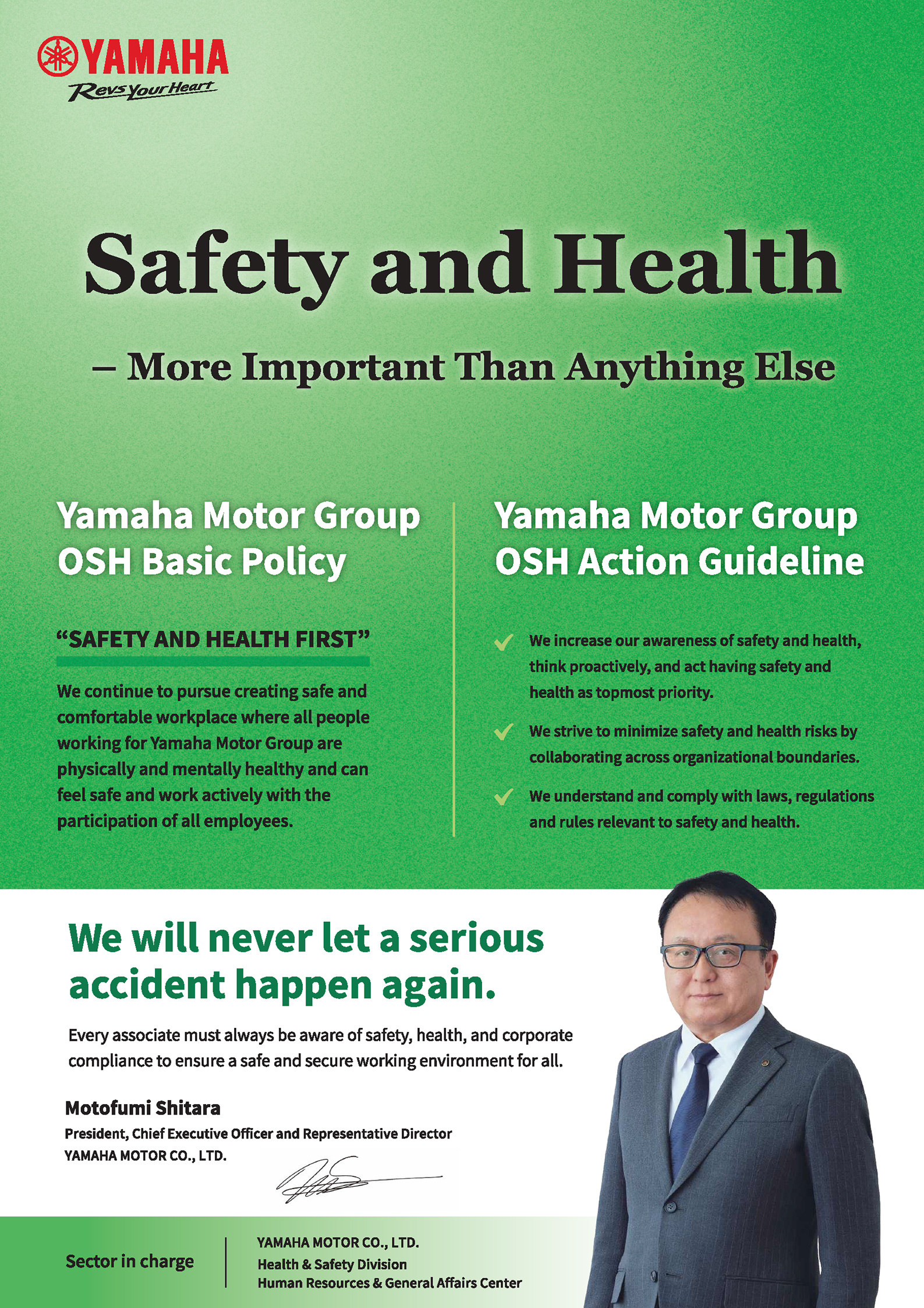
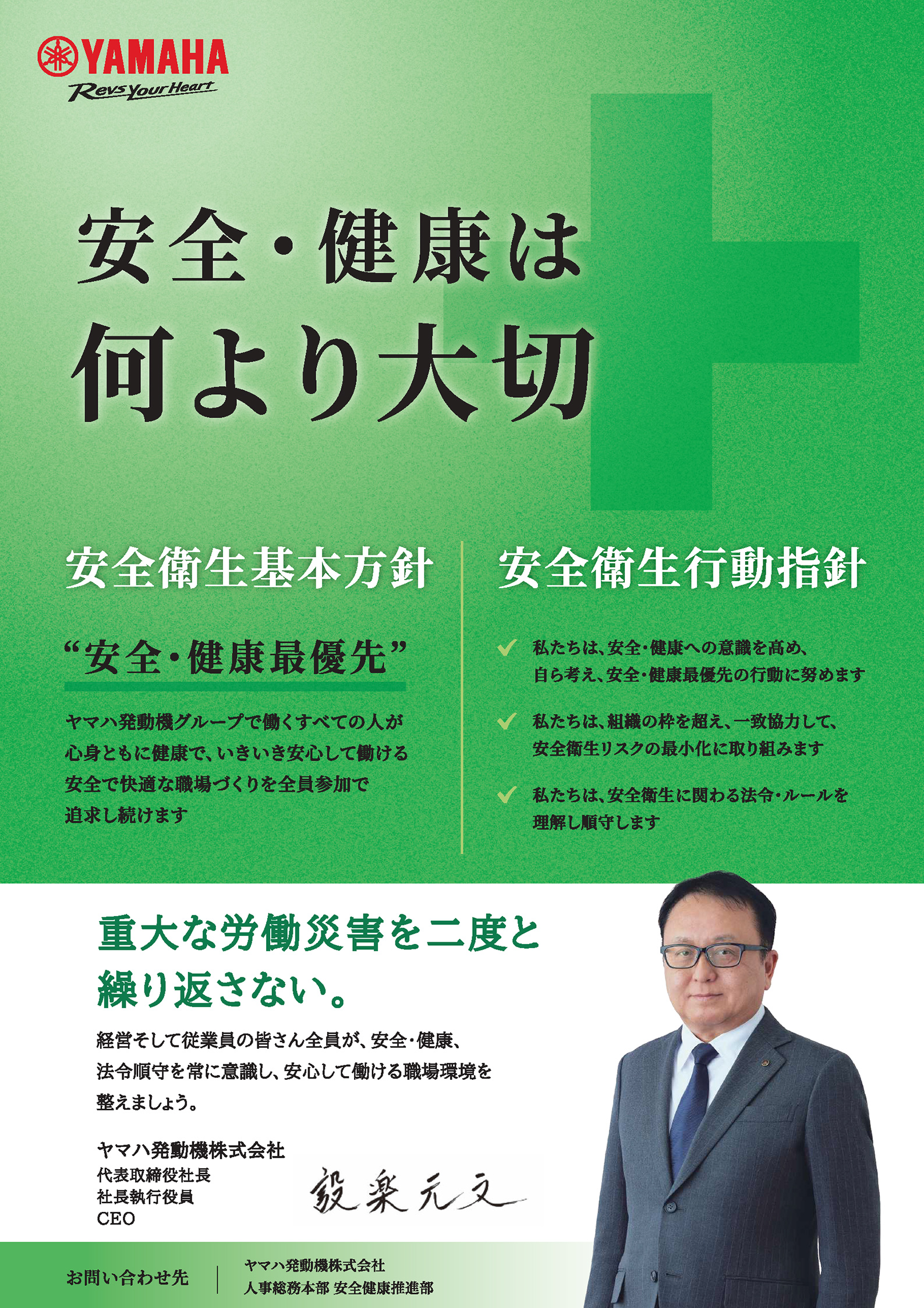
As stated in the Group’s Sustainability Basic Policy, we think that the health and safety of our employees is a foundation of the Company’s growth, and thus we work to improve working environments. To foster a culture of “Safety and Health First” and entrench initiatives aimed at reducing occupational accidents to zero throughout the entire Group, we have formulated the Yamaha Motor Group Basic Policy on Occupational Health and Safety, which further clarifies the contents of the Sustainability Basic Policy, as well as action guidelines, and targets for reducing occupational accidents. Along with endeavoring to ensure health and safety with the participation of all employees, we are pursuing the creation of comfortable working environments and trying to make the execution of duties smoother to lead to greater productivity.
《 YAMAHA Motor Group OSH Basic Policy 》
”Safety and Health First”
We continue to pursue creating safe and comfortable workplace where all people working for Yamaha Motor Group are physically and mentally healthy and can feel safe and work actively with the participation of all employees.
《 YAMAHA Motor Group OSH Action Guideline 》
- We increase our awareness of safety and health, think proactively, and act having safety and health as topmost priority.
- We strive to minimize safety and health risks by collaborating across organizational boundaries.
- We understand and comply with laws, regulations and rules relevant to safety and health.
《 YAMAHA Motor Group OSH Accident Reduction Target 》
- Occupational Fatality/Permanent Disability: Zero cases
- Number of Occupational Lost-time Accidents: 50% reduction compared to the previous year
- Total Number of Occupational Accidents: 50% reduction compared to the previous year
Promotion Structure
At Yamaha Motor Co., Ltd., under this policy, the Central Safety and Health Committee (chaired by the chief general manager of the Human Resources & General Affairs Center and comprising occupational health physicians, representative supervisors of manufacturing, technology, and administrative divisions, and the labor union, among others), with authority delegated to it by the President and Chief Executive Officer, spearheads efforts to provide safe and healthy work environments that comply with standards, regulations and labor agreements concerning industrial safety and health. It also incorporates various activities aimed at achieving zero accidents into medium-term and annual plans. The supervising division for occupational health and safety is also expanding these initiatives to group companies in various countries.
Promoting the Occupational Health and Safety Management System
Yamaha Motor conducts thorough workplace risk assessments and based on that continuously eliminates and reduces occupational health and safety risks in a planned manner. As a part of these initiatives, in 2023, we acquired international standard certification ISO 45001. Furthermore, to raise safety awareness among all employees, we are working not only on regulatory education and training, but also on enhancing various educational programs such as risk assessments and practical hazard prediction training.
In May 2023, an occupational accident occurred at the Company’s Hamakita Factory (Hamakita-ku, Hamamatsu City) in which one employee working on the processing of engine components passed away. To prevent the recurrence of such serious occupational accidents, the Group is continuously implementing preventive measures, including strengthening the operation of its occupational safety and health management systems, enhancing safety measures for equipment and machinery, and promoting safety awareness through the establishment of a Safety Day.
In preparation just in case an emergency situation should occur, we have established reporting standards, methods, contact routes and emergency response procedures for the occurrence of workplace injuries, ill health, sickness and accidents, and we regularly conduct response drills to heighten their effectiveness. Moreover, when an occupational accident does occur, we place the highest priority on assisting the victims, and we investigate the accident scene, clarify procedures for identifying the cause, and strive to prevent a recurrence. We also conduct regular internal audits, verify the effectiveness of the management system and continuously improve the system.
Among the Group, 19 companies (primarily manufacturing entities) had individually obtained ISO 45001 certification as of December 31, 2025. In addition, from 2025, the Company has begun operating Unified Certification (Global Certification), a framework in which the certifications of Yamaha Motor and its Group companies are managed under a single system. Going forward, by expanding the acquisition of certifications and the transition to unified certification across manufacturing sites, we aim to enhance occupational health and safety standards and strengthen governance across the Yamaha Motor Group as a whole.
We have drawn up work safety procedures for external contractors as well in an effort to prevent occupational accidents.
We monitor situations with regard to occupational illnesses (caused by exposure to chemical substances, organic solvents, dust, etc.) through workplace patrols, special health examinations, and we improve the workplace environment as necessary. We also endeavor to create safe and pleasant workplaces based on ergonomics.
Safety Education and Training
We are focused on developing human resources who can support workplace safety and a healthy environment through education and training to improve the skills of safety managers, supervisors, operations chiefs and others in similar roles. The main education and training programs on workplace safety held in 2025 are as follows. These were also carried out at Group companies and business partners in Japan, and we are actively implementing training and education on health and safety at overseas Group companies as well.
| Training | Number of participants | Number of participating companies | |
|---|---|---|---|
| 1 | General health and safety manager training | 35 | Yamaha Motor Co., Ltd. only |
| 2 | Training for persons appointed as safety managers | 202 | 10 companies |
| 3 | Foreman training | 94 | 8 |
| 4 | Hazard prediction training | 834 | 17 |
| 5 | Risk assessment training | 311 | 11 |
| 6 | Safety manager skills improvement training | 19 | 3 |
| 7 | Health manager skills improvement training | 18 | 3 |
| 8 | Training for chiefs of operations involving organic solvents | 50 | 2 |
| 9 | Protective equipment supervisor course | 66 | 5 |
| 10 | Chemical substance supervisor course | 63 | 5 |
| 11 | Special training on dust-related work | 58 | 8 |
| 12 | Special tailgate lifter training | 57 | 4 |
| 13 | Health manager test preparation course | 309 | 3 |
Number of Occupational Accidents
In 2025, there were no fatal accidents at Yamaha Motor Co., Ltd.*1, 12 accidents resulting absence from work, and 24 accidents that did not result an absence (including occupational illnesses). Across the Yamaha Motor Group*2 in 2025, there were no fatal accidents, 151 accidents resulting absence from work (including one accident resulting permanent disability), and 155 accidents that did not result in absence.
The number of fatalities from occupational accidents throughout the Yamaha Motor Group from 2023 onwards was two in 2023 and zero in both 2024 and 2025.External Assurance
We disseminate information about accidents that occur company-wide in an effort to prevent recurrence.
| Scope of aggregation | 2023 *3 | 2024 *3 | 2025 |
|---|---|---|---|
| Yamaha Motor Co., Ltd. only *1 | 11 | 12 | 12 |
| Yamaha Motor Group *2 | 172 | 126 | 151 |
| Total | 183 | 138 | 163 |
| Scope of aggregation | 2023 *3 | 2024 *3 | 2025 |
|---|---|---|---|
| Yamaha Motor only (including dispatch employees) *1 | 0.39 | 0.42 | 0.39 |
| Yamaha Motor Group *2 | 1.58 | 1.00 | 1.22 |
| Yamaha Motor only + Yamaha Motor Group | 1.33 | 0.89 | 1.06 |
| Subcontractors(Yamaha Motor) *5 | 1.35 | 0.00 | 1.25 |
|---|
- *1
- The scope for 2023-2025 is regular as well as dispatch employees, including executive officers and part-time workers.
- *2
- The scope for 2023 covered 127 out of 130 consolidated subsidiaries. The scope for 2024 covered 136 out of 138 consolidated subsidiaries. The scope for 2025 covered 139 consolidated subsidiaries.
- *3
- From 2025, the scope of data aggregation for Yamaha Motor Co., Ltd. and its 139 consolidated subsidiarieshas been changed in line with the scope of the consolidated financial statements. To ensure comparability, the number of occupational accidents (resulting in lost workdays or more) and the occupational accident frequency rate for 2024 and earlier have been recalculated to reflect both the revised reporting boundary and the results of a review of the underlying data. As a result, the number of occupational accidents for 2023 has increased by one from the previously disclosed figure. For 2024, the figures have also been updated to reflect a lost-time accident that was recognized after the previous disclosure.
- *4
- Rate of occurrence of occupational accidents requiring absence from work for one or more days per 1 million total actual working hours.
- *5
- Third parties, excluding indirectly outsourced labor, carrying out certain types of contract-based work for the Company on the Company’s premises.
Initiatives for Health Management with Safety and Health First
As a Kando Creating Company, Yamaha Motor aims to provide customers with new excitement and more fulfilling lives. This requires that each and every one of our employees be “healthy,” both mentally and physically. We believe this enables them to make full use of their passion and abilities, leading to customers’ trust in the products and services we offer.
Additionally, we have set “Safety and Health First” as Yamaha Motor Group Basic Policy on Occupational Safety and Health, positioned it as a key management issue indispensable for business management and the Company’s development, and, with the Company and employees working together as one, aim to create workplaces where each employee can work vibrantly in both mind and body (maintaining and promoting health).
This policy is being deployed and thoroughly communicated throughout the entire Group, both in Japan and overseas.
Promotion Structure
Under the banner of the top commitment described above, Yamaha Motor has established the Central Safety and Health Committee (chaired by the chief general manager of the Human Resources & General Affairs Center and composed of members from the safety and health divisions and representative supervisors from each division), which evaluates and prioritizes initiatives related to health management, formulates medium-term and annual plans, and implements improvements.
Specific initiatives are primarily planned and developed by the Health Promotion Division (comprising occupational health physicians, public health nurses, and registered dietitians). Working closely with the health insurance association, the division operates under a Collaborative Health (One Management) structure to plan, promote, and evaluate the effectiveness of various health-promotion initiatives.
As a result, Yamaha Motor has earned high recognition externally, being certified for four consecutive years as a “White 500” Outstanding Health and Productivity Management Organization (Large Enterprise Category) under the Certified Health and Productivity Management Organization Recognition Program jointly organized by the Ministry of Economy, Trade and Industry and the Nippon Kenko Kaigi.

Priority Areas
Yamaha Motor has defined four priority areas—① occupational safety, ② physical health, ③ mental health, and ④ work style reform (Enhancement of work engagement)—and has developed a “Health and productivity management strategy map” for each area to clarify the linkage between management issues, initiatives, and performance indicators. We have also established KPIs and KGIs for each of these priority areas, and to ensure thorough implementation of the PDCA cycle by visualizing progress. For example, we set specific numerical targets and deadlines for indicators such as the number of occupational accidents, health checkup participation rate, number of employees with or at risk of metabolic syndrome, and smoking rate, and disclose them both internally and externally. Through these initiatives, we develop and implement new health measures that contribute to creating workplaces where each employee can work energetically in both mind and body. In addition to the four areas mentioned above, Yamaha Motor implements a wide range of initiatives, including infectious disease countermeasures and support for employees on overseas assignments, to comprehensively manage employee safety and health. The following provides an overview of Yamaha Motor’s four priority areas.
① Occupational Safety: Fostering a Safety Culture Aimed at Zero Occupational Accidents
Under the Yamaha Motor Group OSH Basic Policy and Action Guidelines, we aim for “zero occupational fatalities and permanent disabilities” and a “50% year-on-year reduction in the number of occupational accidents (lost-time accidents and all occupational accidents)” across the Group, ensuring thorough safety management. With a strong determination never to repeat a serious accident, we designate a “YMC Safety Day” to raise safety awareness, thoroughly implement risk assessments, and work to eliminate and reduce potential hazards in the workplace. Through these activities, we aim to create a workplace environment in which every employee is safety-conscious and all employees participate in ensuring a safe and secure workplace.
For further details, please refer to the “Occupational Health and Safety” section described above.
② Physical Health: Strengthening Measures Against Lifestyle-Related Diseases and Promoting Anti-smoking
Recognizing the “increase in the rate of employees with metabolic syndrome” and the “slowing decline in the smoking rate” as key health issues, we aim to create workplaces where each employee can work energetically in both mind and body. Specifically, through multifaceted initiatives (detailed below) such as providing health guidance based on medical examination results, encouraging exercise opportunities, and supporting anti-smoking, we support the improvement of lifestyle habits and work as a company to promote disease prevention and further health enhancement in the future.
By implementing these initiatives, we are accelerating efforts to create an environment that promotes autonomous health management among employees and working to further reduce lifestyle-related disease risks.
Achieving a 100% Health Checkup Participation Rate, Encouragement for Examinations, and Health Guidance
We have established a framework ensuring that all employees undergo an annual health checkup and have achieved a 100% participation rate in periodic health checkups.
In addition to notifying individuals of their results, occupational health physicians identify employees with confirmed health risks and provide health guidance.
If a re-examination is necessary, occupational health physicians issue a “Yellow Paper” under our encouragement system to ensure follow-up examinations and promote early treatment.
Furthermore, for employees identified as being at risk of lifestyle-related diseases, occupational health nurses and registered dietitians provide continuous individualized health guidance (specified health guidance). In addition, we provide preventive guidance that covers a broader range than national standards for all age groups, including younger employees, striving to prevent severe illness.
Promoting Exercise Habits
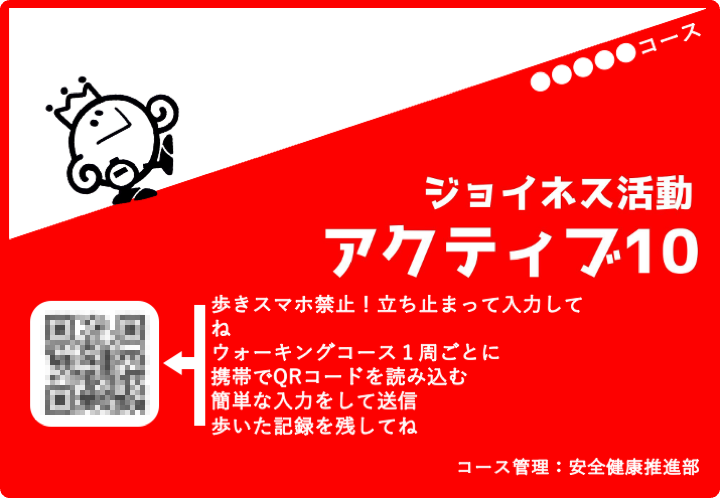
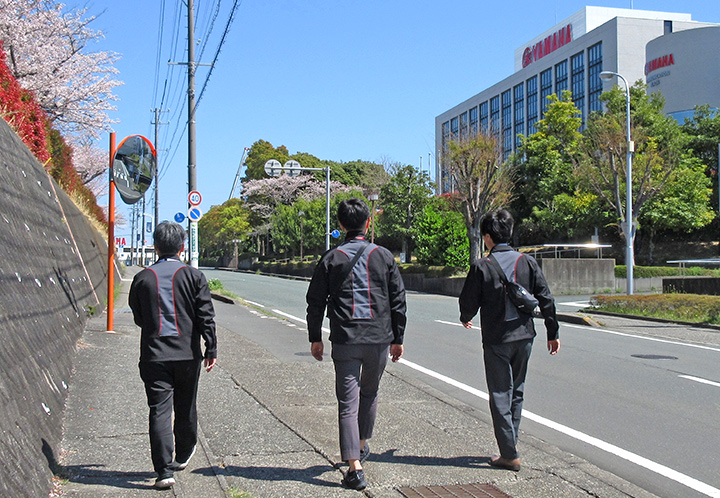
To help employees establish exercise habits and improve health indicators, we are promoting the companywide health initiative “Enjoy Wellness Activities.” Throughout the year, we hold initiatives such as “Active 10,” which encourages 10 minutes of walking per day using in-house walking courses, and smartphone-linked walking events, to create daily opportunities for physical activity. Furthermore, we organize workplace-level health seminars and sports tournaments to provide enjoyable and sustainable health promotion events, helping employees make exercise a regular part of their lives.
In addition, as part of efforts to establish the habitual and effective use of PHRs (Personal Health Records), we are promoting an internal rollout of the Yamaha Health Insurance Society platform, enabling employees to continuously monitor their own health status.
Initiatives Toward a Zero Smoking Rate
Reducing the smoking rate is one of our key health issues, and we have implemented measures such as complete smoking bans on company premises and anti-smoking guidance by medical professionals, and unique company initiatives such as supporter-based accompaniment assistance for employees wishing to quit smoking.
As a result, the smoking rate among employees has dropped from 26.70% in 2022 to 21.35% in 2025.
We are also promoting smoking reduction efforts across Group companies, such as implementing complete smoking bans on their premises, to further reduce the overall smoking rate within the Group.
Supporting Health Through Daily Diet
Through employee cafeterias, we support employee health by offering healthy menu options and holding nutritional consultation sessions led by registered dietitians.
Support for Health Issues Specific to Women
To ensure that female employees can work healthily at every stage of life, we have established support programs addressing women-specific health issues. Specifically, we have set up dedicated health consultation desks for gynecological disorders and menopausal concerns, providing advice in collaboration with external medical specialists. In addition, we regularly hold in-house health seminars for female employees to raise awareness of proper knowledge and self-care methods related to menstruation and menopause, while also providing examination cost subsidies in cooperation with the Japan Health Insurance Association.
③ Mental Health: Promoting Mental Healthcare and Early Response
Recognizing the “increase in the number of employees taking leave due to mental health issues” as one of our key health challenges, we are actively working to maintain and enhance mental health. To prevent mental health issues before they occur, we conduct annual “Stress Checks” and web-based “Presenteeism” surveys (self-assessment of productivity using the WHO Health and Work Performance Questionnaire [WHO-HPQ]) for all employees.
In 2025, the participation rate exceeded 93%, and the ratio of high-stress employees and the workplace health risk indicators based on group analysis improved compared with the previous year. After aggregation, Stress Check results are fed back to each division, visualizing stress factors at the workplace level to support future organizational improvement. In addition, all employees identified as having high stress are offered one-on-one follow-up interviews with occupational health physicians or public health nurses upon request.
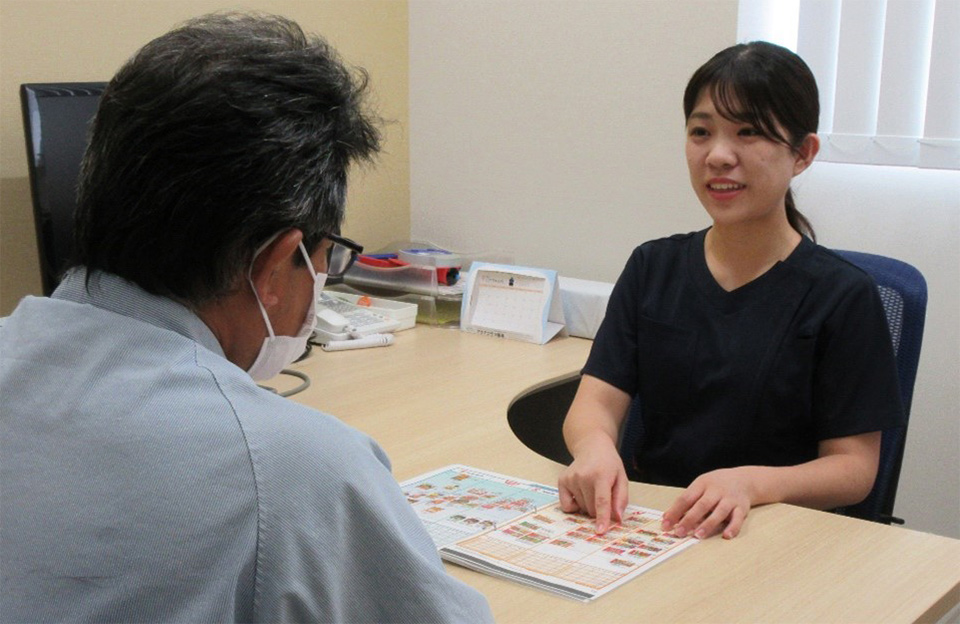
We are focusing on strengthening mental health education. We have made stress management and self-care training mandatory for all employees, and line-care training—designed to help managers learn how to respond appropriately to the mental health needs of their subordinates—mandatory for all management-level employees. Furthermore, we conduct mental health education programs by employee level, including new graduates, mid-career hires, newly appointed managers and supervisors, and general managers. As a new initiative aimed at preventing mental health issues before they occur, the Group introduced a Self-Care Coaching Program conducted by certified psychologists beginning in 2025. In 2026, the scope will include newly appointed core employees and high-stress employees, further enhancing mental healthcare initiatives.
In addition, we have established an internal mental health consultation desk, enabling employees to seek advice at any time from external medical specialists (advisory doctors) in addition to occupational health physicians. For employees stationed overseas, as described later, we provide an environment where they can consult online with Japanese physicians from their overseas locations. As part of our support measures for employees who take leave due to mental health issues, we implement specialized pre-return programs (Rework Programs) and post-return follow-up in cooperation with department heads and occupational health physicians to prevent recurrence.
We will continue to maintain and improve mental health, ensuring early identification and response to mental health issues, and promote the creation of workplaces where every employee can work energetically in both mind and body.
④ Work Style Reform: Correcting Long Working Hours and Enhancing Work Engagement
Yamaha Motor is working to improve workplaces with the aim of promoting employee health and further enhancing productivity from the perspectives of maintaining physical and mental well-being and work style reform. As part of these efforts, we have made interviews with occupational health physicians and supervisors mandatory for employees who work overtime beyond limits set by internal standards that are stricter than those required by law, striving to prevent health problems caused by overwork.
We also promote the taking of consecutive vacation days and provide childcare and nursing care leave systems, as well as short working hour systems that exceed legal requirements, while encouraging male employees to take childcare leave. In addition, we have established teleworking and flextime systems to enable flexible workstyles not bound by location or time, thereby enhancing work-life balance.
For further details, please refer to the “Supporting Work-Life Balance” section described above.
⑤ Other Key Initiatives and Distinctive Efforts
In addition to the four priority areas mentioned above, the following initiatives are of particular importance.
Support for balancing treatment with work
For employees who require ongoing treatment for illnesses such as cancer or diabetes, occupational health physicians and occupational health nurses collaborate with attending physicians to create support plans that enable them to balance treatment and work.
Depending on the employee’s condition, we allow flexible work arrangements such as staggered office hours, remote work, and adjustments to job content and workload, supporting employees in continuing their careers while undergoing treatment.
Infectious Disease Countermeasures
To prioritize the lives and health of our stakeholders, including employees, Yamaha Motor has taken measures in response to the spread of COVID-19 (establishing an organization for countermeasures, introducing telework and staggered office hours systems, issuing instructions to expatriate employees and their family members to return to Japan, and formulating and disseminating various policies and responses). In addition, we have formulated and implemented the “Procedure for Business Continuity (Pandemic Influenza Version)” to prepare for the risks posed by future unprecedented infectious disease outbreaks.
We also strive to prevent infectious diseases on an ongoing basis by subsidizing vaccination costs during seasonal influenza periods.
Health Support for Employees Before Overseas Assignment
Before overseas assignment, we provide health management training that includes information on infectious diseases requiring attention at the destination (such as viral hepatitis and malaria) and administer necessary vaccinations. After the assignment, we continue to ensure that employees undergo periodic health checkups.
Mental and Physical Healthcare for Overseas Assignees and Accompanying Family Members
Yamaha Motor has established a follow-up system by setting up a dedicated overseas medical team and a health consultation hotline.
The consultation topics cover a wide range of issues beyond physical symptoms, medical treatment, and mental health, including communication with local staff, skill development, career matters, pregnancy, childbirth, family relationships, children’s education, and developmental concerns—encompassing various aspects of working and living overseas.
The overseas medical framework consists of a multidisciplinary team including not only specialists in various medical fields but also psychiatrists, clinical psychologists, licensed psychologists, counselors, career consultants, and business consultants, providing comprehensive support.

| Assignment Region | Number of cases | Mental health consultations | Physical health consultations | Other (e.g., greetings, status updates, etc.) |
|---|---|---|---|---|
| Asia | 4 | 5 | 7 | 16 |
| Africa | 0 | 0 | 0 | 0 |
| Europe | 2 | 1 | 0 | 3 |
| Asia & Oceania | 0 | 1 | 0 | 1 |
| Middle East | 0 | 0 | 0 | 0 |
| Latin America | 0 | 0 | 0 | 0 |
| North America | 3 | 1 | 2 | 6 |
| Total | 9 | 8 | 9 | 26 |
- * Each individual interaction is counted as one consultation.
- * Consultations regarding physical health / mental health / other matters handled within the same email thread are counted individually.
Furthermore, we conduct a “Stress Check for Overseas Assignees” twice a year for overseas assignees, with our specialized overseas medical team providing support to ensure detailed and attentive care for those subject to the program.
| Implementation period | Target participants | Participants | Participation rate |
|---|---|---|---|
| February 2025 | 477 | 455 | 95.4 |
| August 2025 | 502 | 479 | 95.4 |
Health and Productivity Management Strategy Map and Effectiveness Measurement
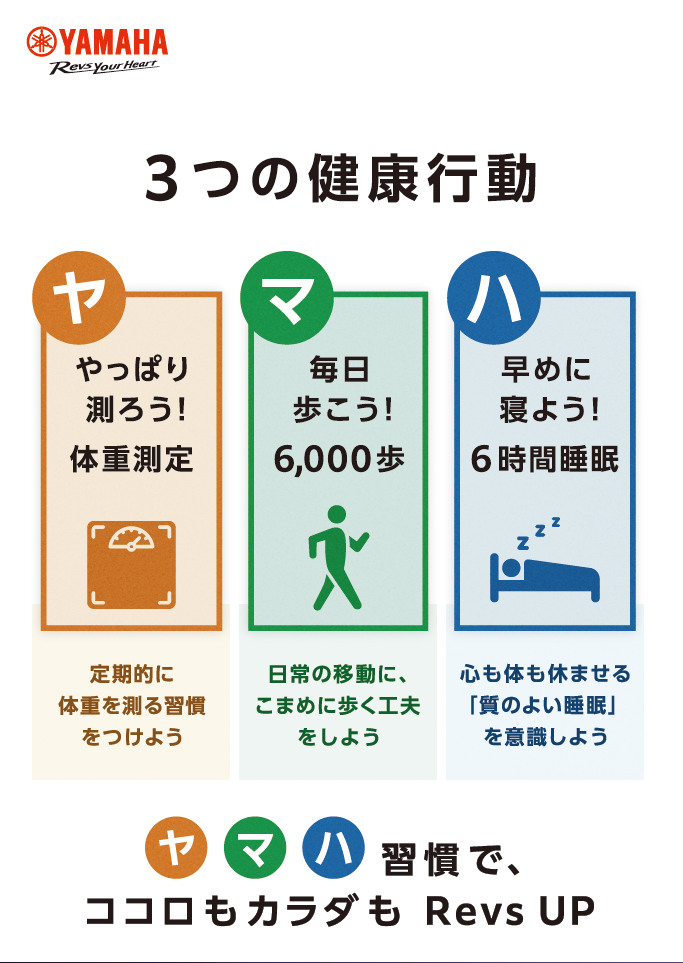
Yamaha Motor has developed a “Health and Productivity Management Strategy Map” to ensure that health investment leads to greater employee vitality and improved business outcomes, and has systematized related initiatives. Based on the concept of “Work in my style, work in Yamaha style,” the strategy map aims to enhance corporate value through initiatives implemented across the four priority areas. To achieve this, in January 2026 the Group established the Ya-Ma-Ha Three Health Actions to promote the “extension of healthy life expectancy and reduction of health disparities” through the “improvement of individual behaviors and health conditions” as outlined in Health Japan 21 (third term). Through these initiatives, the Group is working to foster employees’ awareness of health while setting various KPIs and managing progress through the PDCA cycle.
Key performance indicators include the ratio of employees classified under work restriction standards (hereinafter “high health risk individuals”), the number of occupational accidents, and the number of long-term absences due to mental health issues. Reducing these figures is positioned as a medium- to long-term goal. Indicators related to employees’ lifestyle habits and awareness (health checkup participation rate, exercise rate, smoking rate, proportion of high-stress individuals identified in stress checks, and engagement score) are also monitored to help verify the effectiveness of health investments.
Health and Productivity Management Strategy Map

Health and Productivity Management Outcome KPI and KGI Results and Fiscal 2030 Targets

In 2025, the ratio of high health risk individuals was 2.75% (compared with 2024: down 0.09%). Although the rate of employees subject to specified health guidance in 2025 was 19.41% (up 0.09% from 2024), indicating a slowing decline and an emerging upward trend, the Group is promoting initiatives aimed at achieving its 2030 target of 18% by establishing health guidance practices across all age groups and strengthening approaches for at-risk individuals. In 2025, total absences due to illness (absenteeism) averaged 2.3 days per person per year (calculation methodology revised from 2025). Going forward, we will further enhance measures to prevent the aggravation of illnesses and work to reduce absenteeism losses.
Meanwhile, the degree of productivity loss due to health conditions (presenteeism) improved in 2025. The Group will continue striving to achieve its 2030 targets (absolute presenteeism: 63.0; relative presenteeism: 1.08) by focusing on high-risk employees for both mental and physical health and further strengthening preventive measures aimed at reducing the occurrence of new cases.
Furthermore, our annual employee awareness survey continuously checks not only employee engagement but also the degree to which employees feel valued by the company (POS indicator: Perceived Organizational Support), whether “Safety and Health First” is being practiced, and the level of psychological safety in the workplace. Among these, questions related to psychological safety show an increasing trend in positive responses every year.
As described above, Yamaha Motor’s health and productivity management initiatives are steadily evolving through systematic initiatives based on the strategy map and progress toward achieving numerical KPI and KGI targets. Going forward, under the philosophy of “Safety and Health First,” we will continue to promote workplace environments where employees can work energetically and to pursue continuous improvement in addressing health-related issues. We will further advance our health and productivity management initiatives that balance employee health and corporate growth, realizing sustainable enhancement of corporate value and contributing to our stakeholders.
Relationship with Labor Union
Yamaha Motor has concluded a labor agreement with its labor union “to establish working conditions and management systems that are based on mutually fair understanding and good faith.” Under this agreement, the Company provides the labor union with appropriate explanations of various measures to be implemented and publishes reports on labor management in an effort to ensure employees’ understanding of these issues. Moreover, the Company holds labor-management conferences and committee meetings regularly, as well as additional labor-management conferences taking up themes based on management initiatives or to address issues raised by the labor union. Officers of the labor union also participate in the management and operation of the corporate pension fund, the health insurance cooperative, and the mutual aid association.
As for ensuring the payment of minimum wages, not only do labor and management conclude agreements each year committing to the minimum wage, discussions between labor and management are also carried out regarding appropriate wage levels, including those using the consumer price index as a basis.
Yamaha Motor adopts a union shop system in which non-managerial employees are members of the labor union, and the participation ratio is 85% of all employees. Domestic Group companies have also established labor unions or labor committees and engage in labor-management dialog through those bodies. Labor unions of Group companies, including the Yamaha Motor Labor Union, are members of the Federation of All Yamaha Workers Unions and pursue mutual cooperation through the federation. Overseas Group companies have established structures for engaging in appropriate labor-management dialog based on the labor practices of the respective country or region, and wages are paid in compliance with local regulations.
Addressing Overseas Labor Risks
Many of our production sites are located in ASEAN member states, India, and China, where the risk of labor disputes is high. Accordingly, situations in these countries must be watched closely as we carry on our business activities. For this reason, we incorporate "shutdown due to labor disputes (strike, etc.)" into a risk management ledger employed across the Group, so that we can use it to monitor self-inspections and development of countermeasures.
Manufacturing companies regularly collect information about the legislation in each country and regional labor issues, work to strengthen labor-management relations, and ensure people know where to report and discuss labor issues. At the headquarters, we are working on sharing the know-how within the Group and maintaining and strengthening the communication system for emergencies, leveraging the knowledge accumulated over the years on labor dispute cases.
In 2025, there was no noteworthy occurrence of any labor issues.

