


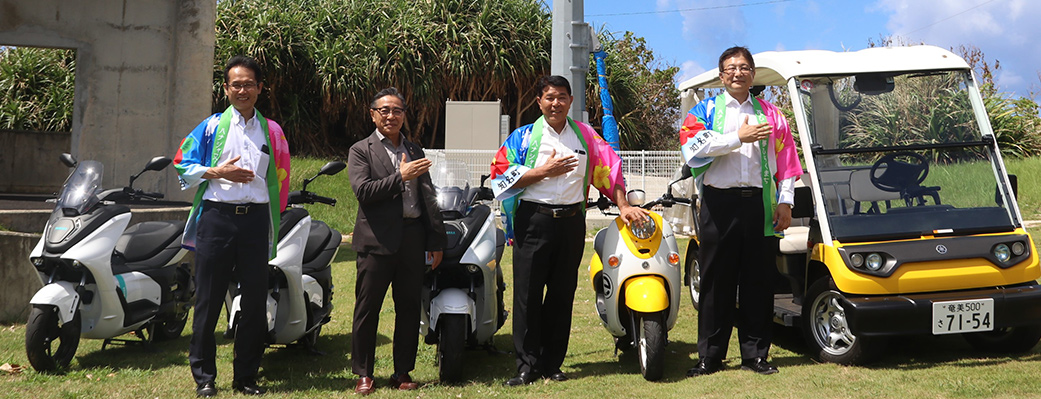
Yamaha Motor actively works to address various issues local communities are facing by devising solutions that combine our products and personnel with the wealth of know-how we have accrued through our business. One example of this is our collaboration with Nagoya University and Okinoerabujima on initiatives for building a sustainable, decarbonized mobility framework. This joint research project began in 2023, with Yamaha Motor loaning various electric vehicles to Okinoerabujima’s local government. The level of carbon reduced during commuting hours and in day-to-day life was tracked and recorded, and issues hindering wider adoption of EVs on the island were identified.
Further north in the city of Miyoshi in Tokushima Prefecture, Yamaha Motor signed a “Connecting Forests” agreement with Kyushu University. Working together, we use the nature credits system to appropriately maintain and utilize Miyoshi’s abundant forests in order to not only ensure sound forest management but also to revitalize the region.
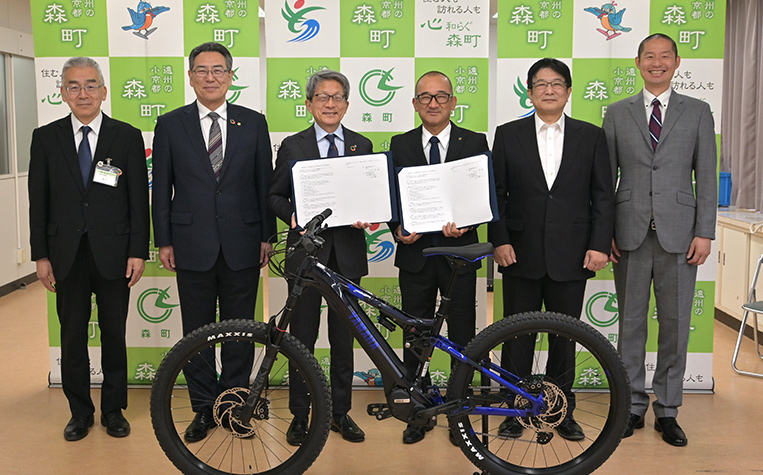
We have also begun working with municipal governments in western Shizuoka Prefecture where Yamaha Motor headquarters is located, signing a comprehensive partnership agreement with the town of Morimachi in the Shuchi District in 2025. The production base for Yamaha’s eBike drive units is in Morimachi, giving the town the nickname of “Hometown of the eBike.” Taking advantage of the town’s lush natural surroundings, long history, culture, and more, we are working to create recreational areas for people of all walks of life to enjoy mountain biking. Furthermore, we are aiming to help solve the various issues mountainous areas of the region are tackling by developing and preserving the network of mountain trails.
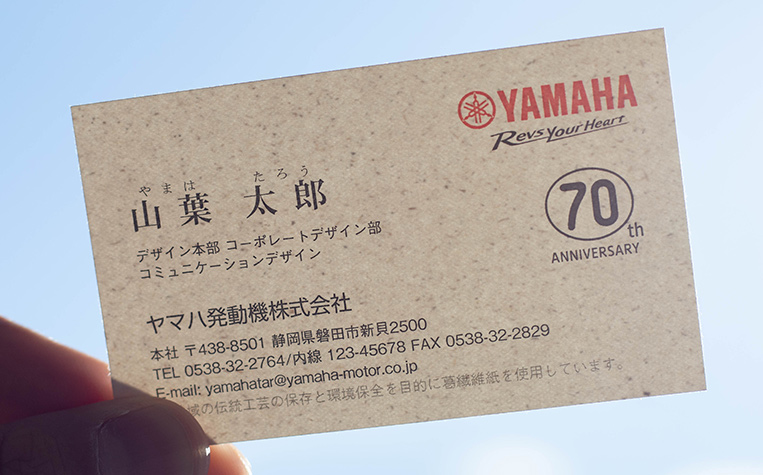
We are also supporting the preservation of traditional local crafts and industries. The city of Kakegawa in Shizuoka Prefecture has long been known for its kuzufu fabrics woven from the natural fibers of wild kudzu vines. However, as lifestyles in Japan have changed, not only has demand for the city’s artisanry declined but passing down such traditional crafts to keep them alive has also become a real risk.
Faced with these challenges, companies and organizations in and around Kakegawa are joining forces to find new uses for products made out of kudzu. Yamaha Motor is among them, switching over to utilizing kudzu fiber paper for the business cards used by the roughly 10,000 employees in Japan. Going forward, we plan to introduce these kudzu business cards to our group companies and continue taking on other projects that will help preserve the region’s traditional industries.
.
