Exploring the Logic Behind Phenomena to Create Customer-Oriented Quality

Contributing to High Quality Expectations Through the Development of Controls
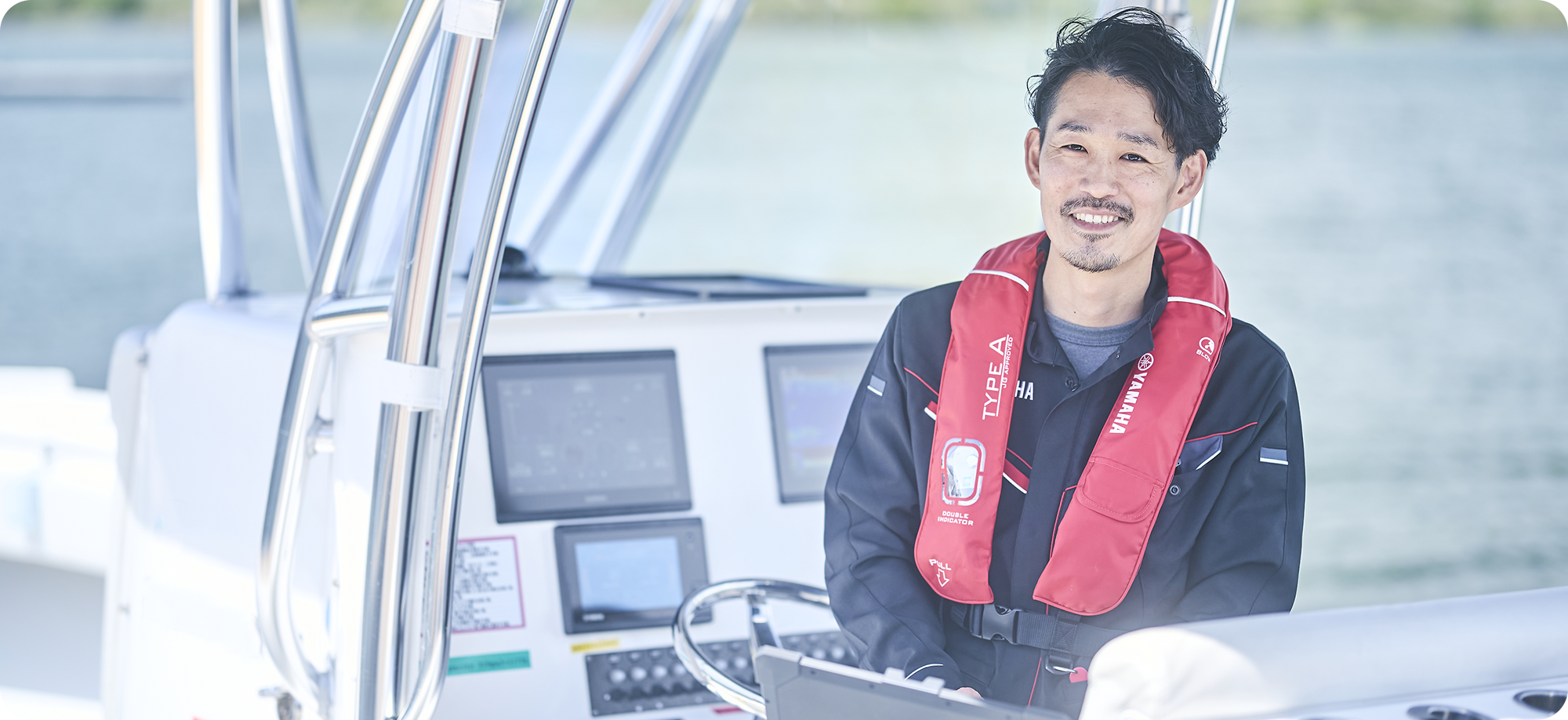
Outboard motors are subjected to extremely demanding conditions, including impacts from rough seas, corrosion caused by seawater, and continuous high-rpm operation. Furthermore, in the unlikely event of a malfunction occurring at sea, the risk of drifting necessitates an exceptionally high level of reliability. Thus, the development targets we pursue are set at an exceptionally high level.
I am responsible for engineering electrical and control systems, both of which have a significant impact on the quality and reliability of outboard motors. My work involves optimizing parameters in the engine control unit (ECU) to fine-tune functions such as fuel injection and shift timing. To verify the suitability of the parameters we set, we repeatedly conduct standalone tests in pool facilities as well as various tests with the system installed on an actual boat, refining accuracy by incorporating the data obtained. In large outboard motors, the number of these parameters can reach as many as 1,500.
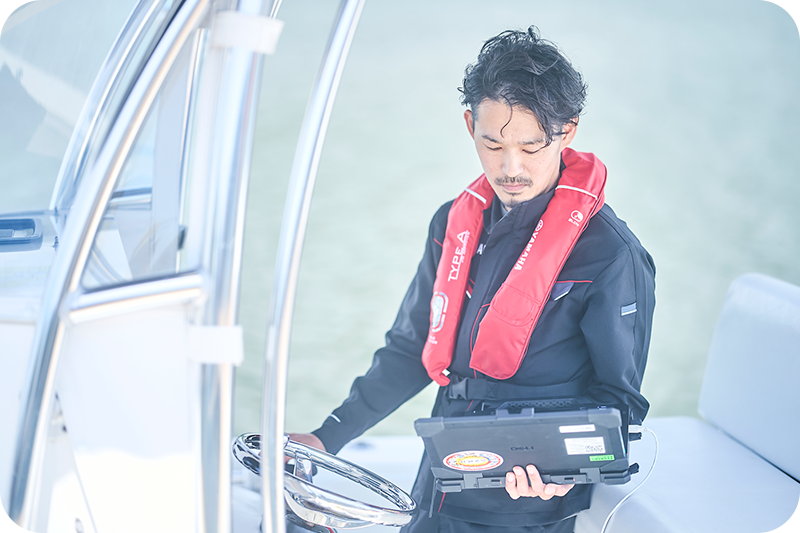
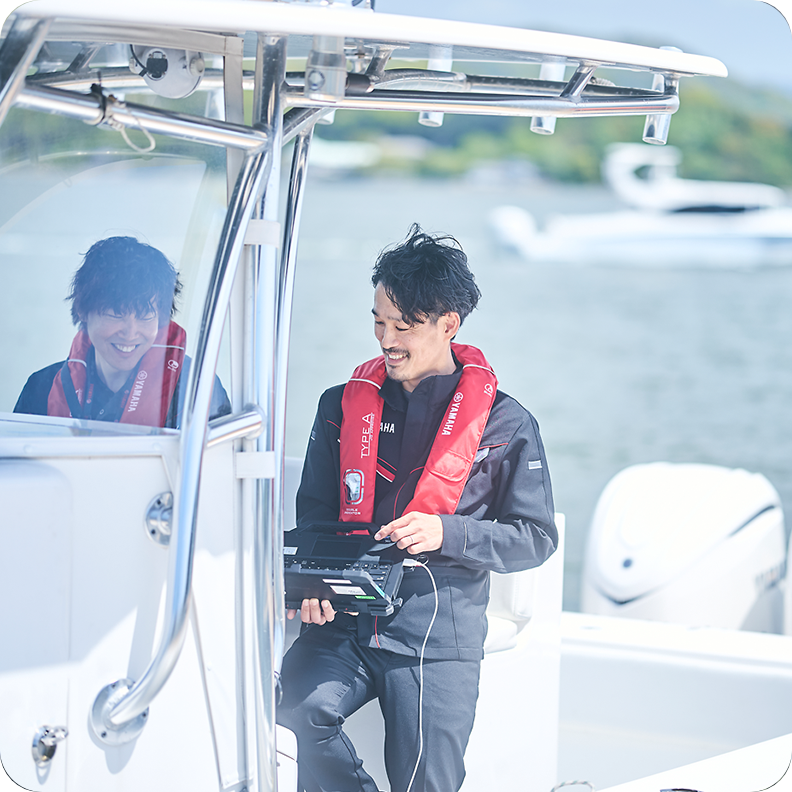
When I joined the company, electrical systems were attracting considerable attention as a growing field. At this time, the company looked to be working on building up its resources in this field. Coming from a mechanical engineering background, I found it especially fascinating that changes made on a PC could be reflected in engine behavior in real time. Through these experiences, I came to see control development as the core of my career.
Creating New Value, Bringing Smiles and
Peace of Mind to Our Customers
To ensure quality, I always place importance on sound logic when building consensus. For the various phenomena that arise from parameter changes, whether positive or negative, I make it a point to engage with multiple team members in thorough discussions to understand the underlying reasoning. This fundamental mindset and belief were cultivated during my time handling complaints from the market. I realized that even if addressing the observed phenomena appears to resolve an issue temporarily, leaving the root cause unaddressed can lead to new problems under certain conditions, making it insufficient for ensuring Customer Oriented approach quality.
As an engineer, the true joy lies in delivering the value we create to our customers and seeing them experience it. One example is the improvement of shift shock, which refers to the noise and vibration that occur during gear shifting. With the expansion of maneuvering functions leading to a significant increase in shifting frequency, we recognized that reducing shift shock would directly contribute to improved silence and durability and have a substantial impact on overall quality. This is why we took on this challenge.
I developed countermeasures from the perspective of the experimental team, but close collaboration with the design team was essential to incorporate them into the product. By repeatedly visiting the team, exchanging ideas, and building mutual trust, we were ultimately able to achieve a breakthrough. This improvement was highly recognized both inside and outside the company, with boat builders around the world commenting, “What amazing improvement. We really appreciate it!”. Such compliments have left a lasting impression on me.
Compared to the automotive industry, the control systems field for outboard motors still has substantial potential for further development. Going forward, I aim to deepen my expertise and create new technologies and features that deliver a safer and more fulfilling marine lifestyle while contributing to the further development of the industry.