Electric Trials Bike R&D
One Approach toward Carbon Neutrality
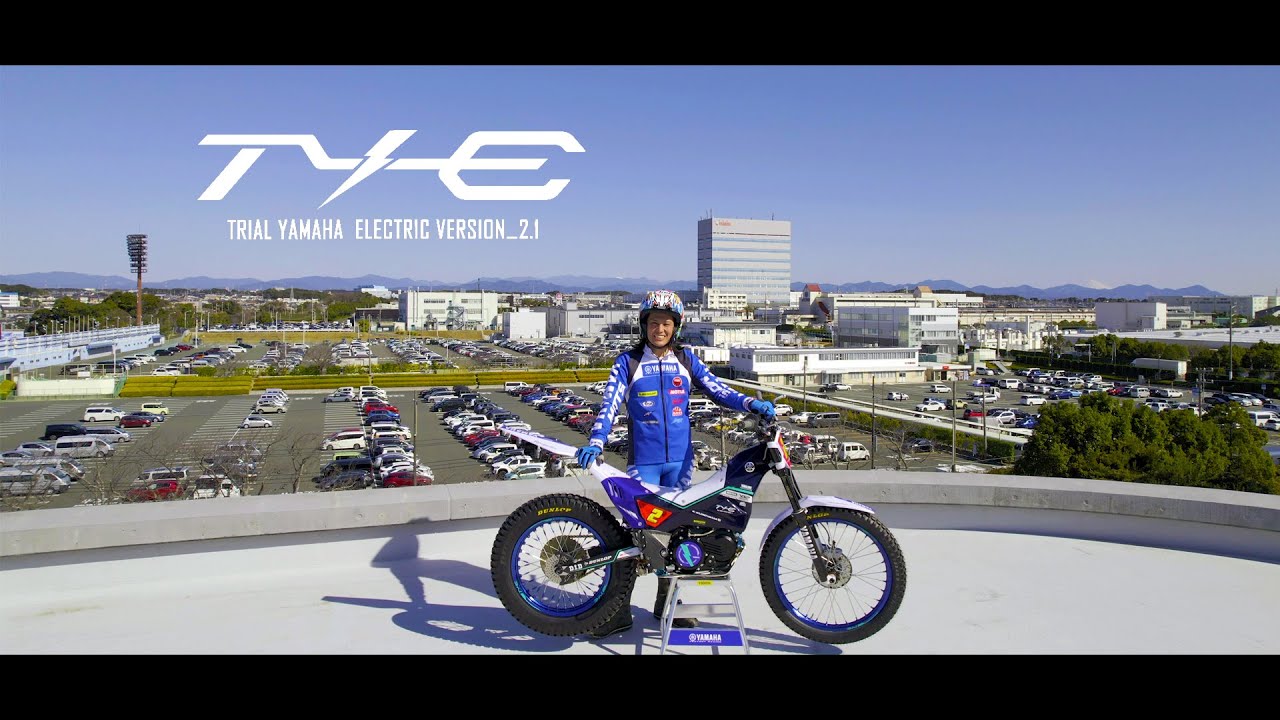
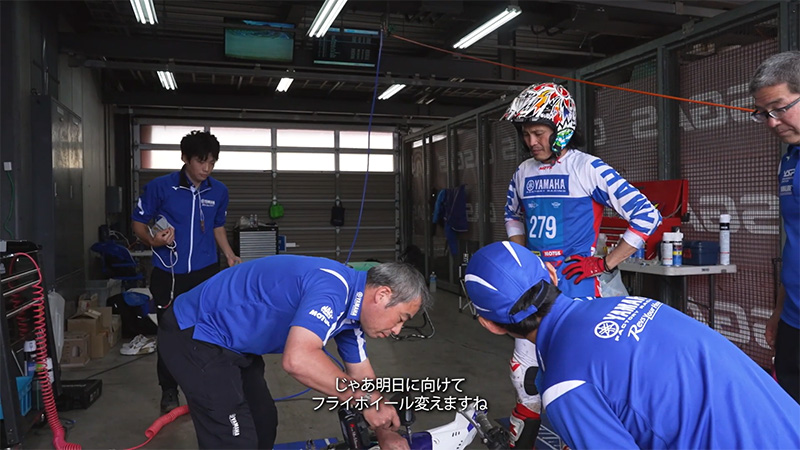
A video interview (released in 2023) with Executive Officer Toyoshi Nishida
talking about the TY-E 2.1 electric trials bike
Yamaha Motor is engaging in a multi-pathway approach to achieve its goal of carbon neutrality by 2050, offering products and technologies that take into account the different energy mixes and socioeconomic circumstances present in each region. Electrification is one avenue in this approach and the company is engaged in a range of R&D pursuits for advanced technologies.
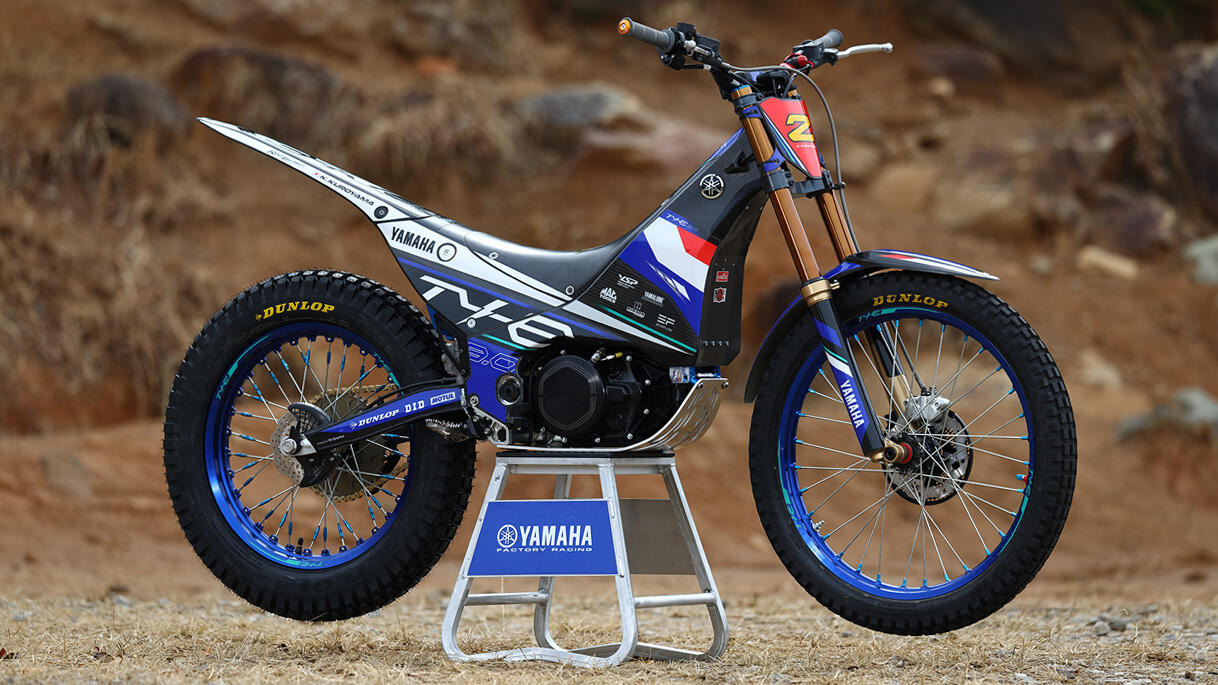
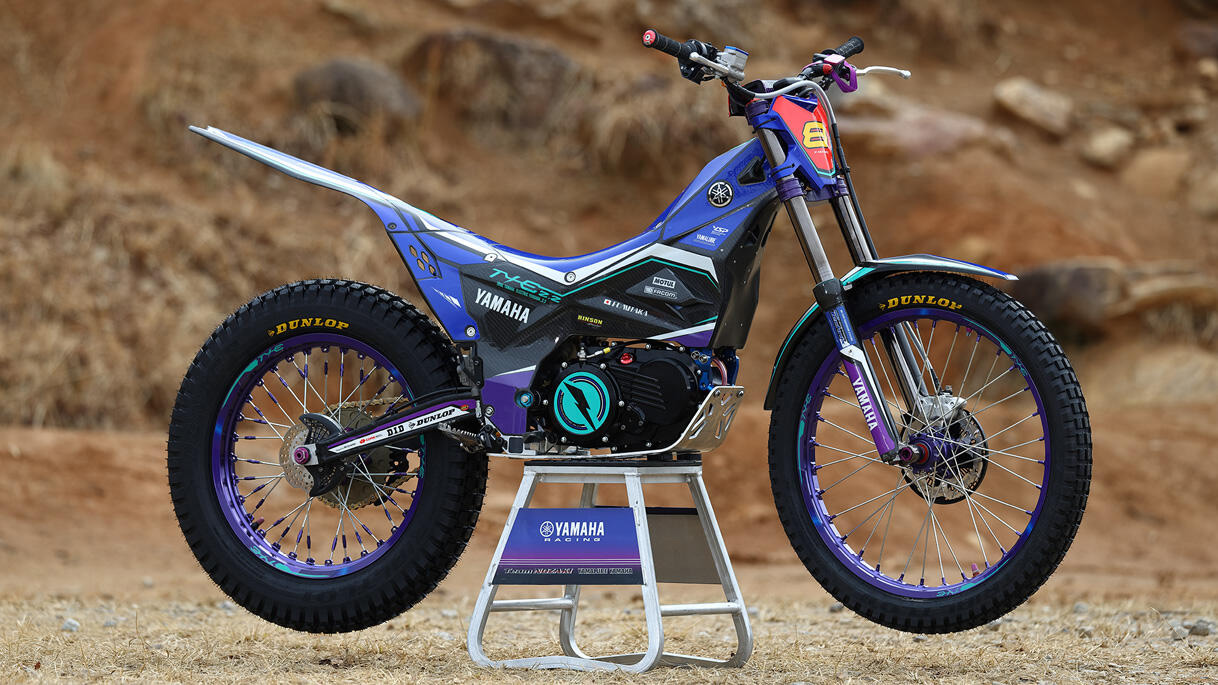
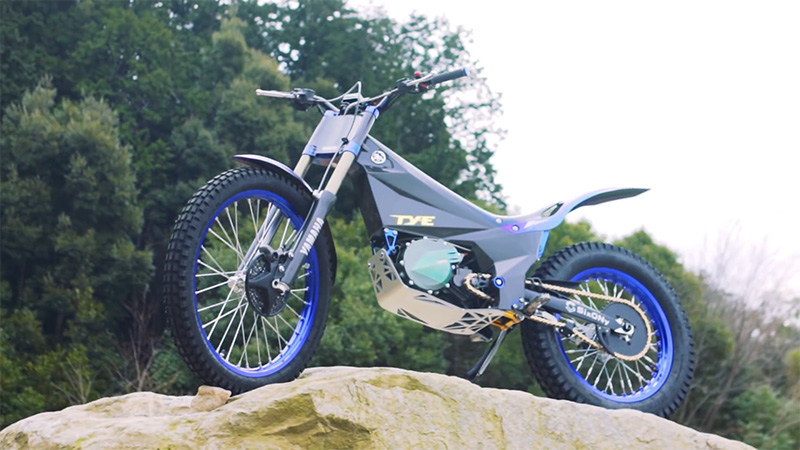
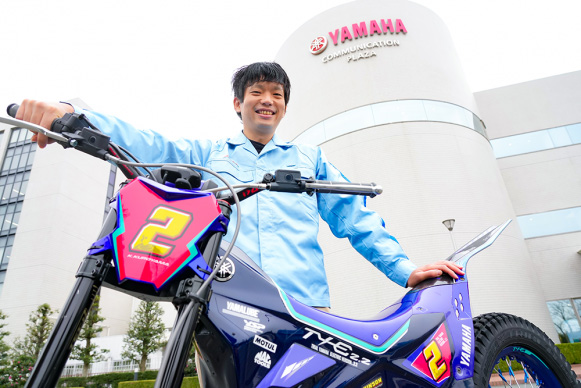
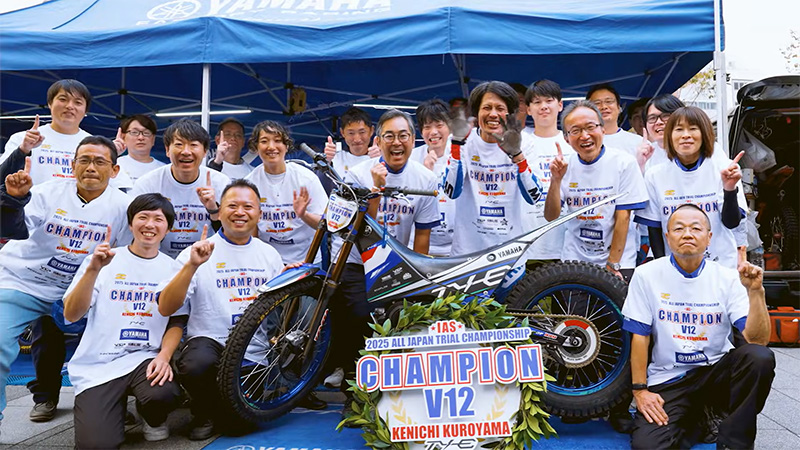
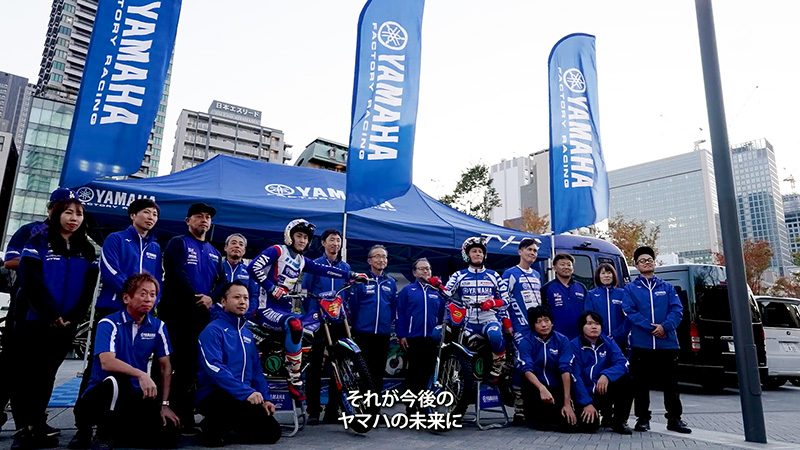
This page introduces the technological development of the TY-E electric trials bike that claimed Japan’s first championship title with an electric motorcycle in 2025. Through the invaluable data and feedback from pro riders gained in the ever-challenging environment of racing, where extreme conditions and performance requirements are a given, the TY-E has spearheaded Yamaha Motor’s technological development efforts into electric mobility platforms for over a decade.
Examining the Potential of EVs to Surpass Conventional ICEs
There is a system in place within Yamaha Motor’s R&D departments that allows employees to use 5% of their working hours for voluntary, independent research and is dubbed “Evolving R&D” (also known as the “5% Rule”). The TY-E electric trials bike is an advanced development vehicle born through this program.
But what led to the conclusion that electrifying a trials bike would be advantageous for Yamaha’s advanced development efforts? It all began with the hurdle that has long stood in the way of electric vehicles in terms of both their development and propagation: range. Trials competition inherently does not require a machine capable of long distances and is held in a cordoned off area with allotted time limits.
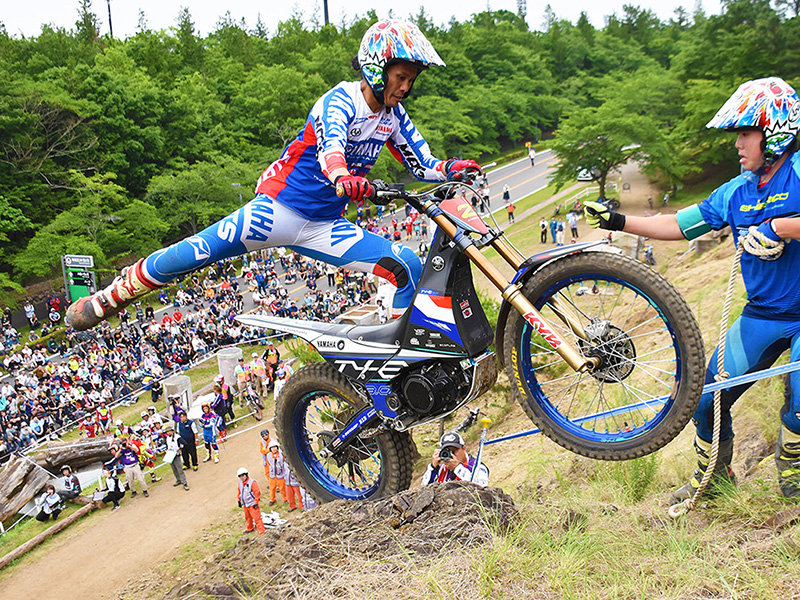
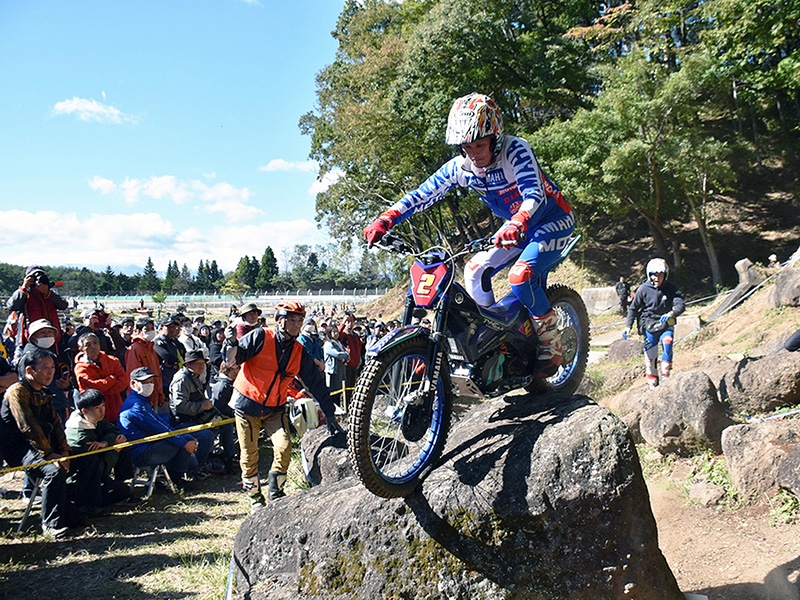
Trials is a points-based competition in which motorcycle riders must traverse a pre-determined course made up of sections using the natural terrain, such as steep rockfaces, inclines, rocky outcroppings, and trees. If a rider can navigate a section without putting their foot on the ground, they are awarded full points and alternatively have points deducted if they do touch the ground. Finishing positions are decided by the total number of points across several sections.
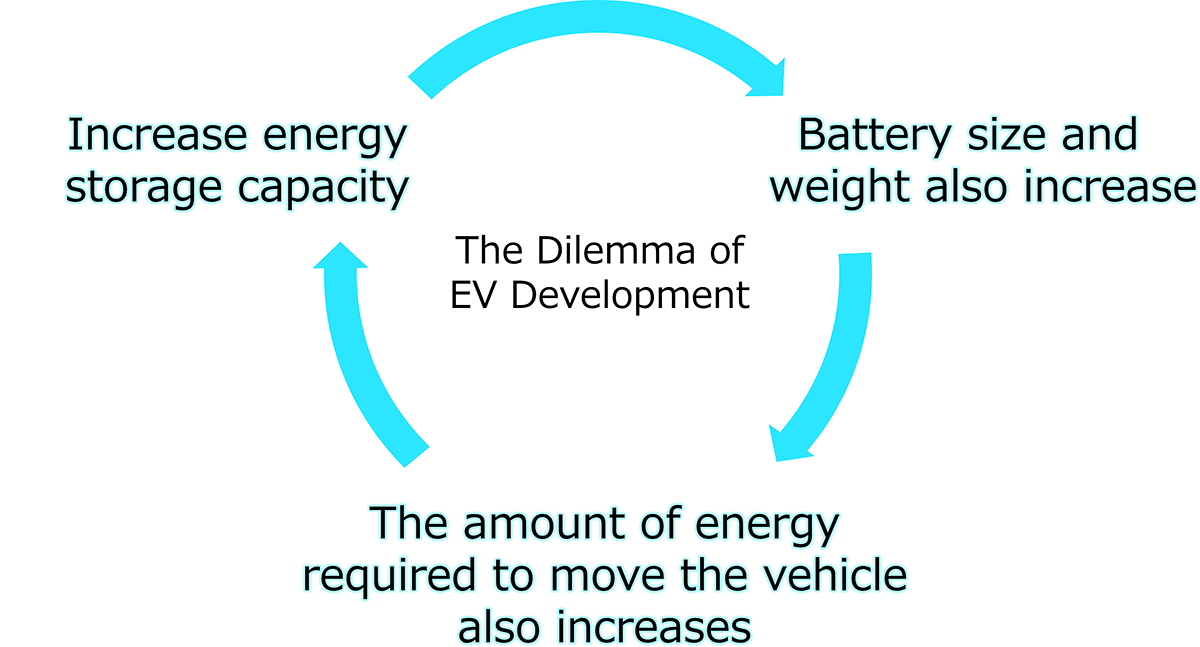
The development and spread of EVs has long faced the following self-driven dilemma:
We want to make long-distance rides for prolonged periods possible. To do that, we need to increase the amount of energy we can store on the vehicle, so we have to make the battery bigger, but this also makes it heavier, resulting in even more energy being needed to move the vehicle in the first place. In the end, neither the ridable range or the time you can ride increase.
Even though Yamaha Motor has been engaged not only in R&D for electric motorcycles but also their commercialization and spread from an early stage, this dilemma has obstructed meaningful progress for years.
However, with trials bikes specifically for competition, this dilemma becomes less problematic, and with the rapid advances EV technologies have experienced in recent years, downscaling them for use on a motorcycle has become more realistic. The ability to make the battery lightweight and compact with higher energy density was a big key driver for the TY-E’s R&D.
The powertrain traits desired in a trials bike are low-down and midrange torque, quick acceleration, manageable power delivery, and response faithful to a rider’s subtle inputs. With these being the points for evaluating a trials machine, an electric bike was judged to be a good choice for making technological advances, future potential, and as a platform for exploring directions for next-generation technologies.
Greater Technological Challenges and Possibilities through Electrification
Simply having more power and more torque does not necessarily translate into all-around performance gains; high-level R&D into EV-oriented chassis technology becomes possible as well.
A trials bike needs a chassis that is stiff enough to quickly respond to rider inputs and strong enough withstand the stresses and impacts of the sport’s repeated jumps, landings, and so on, but it needs to be extremely lightweight at the same time. In other words, the chassis must strike a delicate balance between these two wholly opposing goals.
In that sense, while reducing the weight of battery systems is a key issue EVs of all types are having to face, Yamaha Motor’s decision to use a monocoque frame made of carbon fiber-reinforced plastic (CFRP) for the TY-E represents a rare technological challenge not just among trials bikes to date but across the motorcycle industry as a whole.
The fact that all-electric cars grew more commonplace first in luxury and supercar segments points to the reality that the price tag is still a barrier when developing EV technologies to meet requirements suitable for the wider market. Models being designed for mass production and sale to the public must clear a wide range of requirements, such as performance in different kinds of uses and environments, sufficient durability when used in those ways, and ease of maintenance and ownership.
Factoring costs into a commercially available product makes balancing the three-way trade-off between range, power/torque characteristics, and weight an even more difficult puzzle to solve. But deploying a minimal number of dedicated competition vehicles in a factory team offers different conditions to meet from a production vehicle, providing comparatively more freedom for R&D.
Technology for Uniquely Yamaha Value with EVs as Well
To herald the day when people everywhere can choose electric motorcycles as their main method for carbon-neutral mobility will obviously require greater innovations with battery technology, but it will also necessitate charging infrastructure becoming more commonplace and accounting for local energy mixes and challenges—developments dependent on outside parties and organizations. In short, this is an undertaking Yamaha Motor cannot do alone.
However, in terms of achieving carbon neutrality from a global perspective, technological projections show EVs becoming more widespread. And given the expectations held by society and users at large, Yamaha Motor believes its longstanding core values for a Yamaha motorcycle—true to the brand in execution and delivering a feeling of rider–machine unity at the controls—will remain the same even with EVs. This mentality is central to the evolution of the company’s traditional core competencies in powertrains, chassis, and electronic control.
Based on this background, Yamaha Motor set a goal to surpass conventional ICEs with an EV, and the TY-E development project has been moving forward as part of the company’s R&D exploring avenues with electrification.


Aimed at Providing More Fun than an ICE Model
Yamaha Motor reviewed its Yamaha Motor Group Environmental Plan 2050 first formulated in 2018 and set a new goal in 2021 to achieve carbon neutrality throughout all of its business activities—including across the life cycles of its products—by 2050.
The R&D project for an electric trials bike also entered its next phase. Applying the wealth of lessons and results acquired over the five years since the first TY-E, the bike evolved into the TY-E 2.0 in 2022.
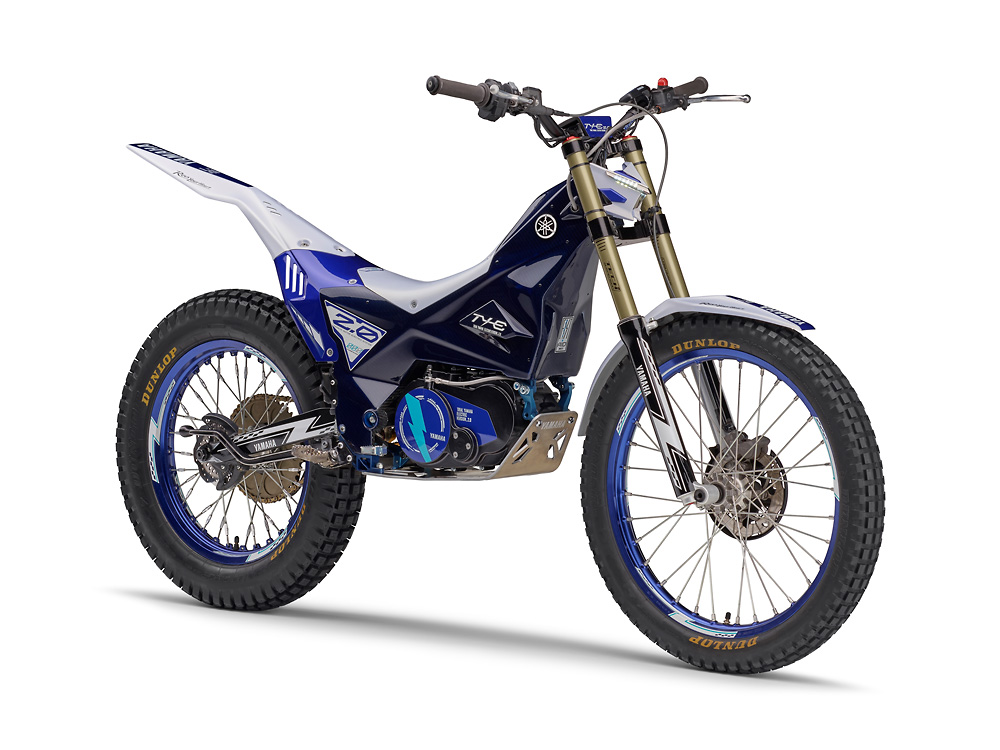
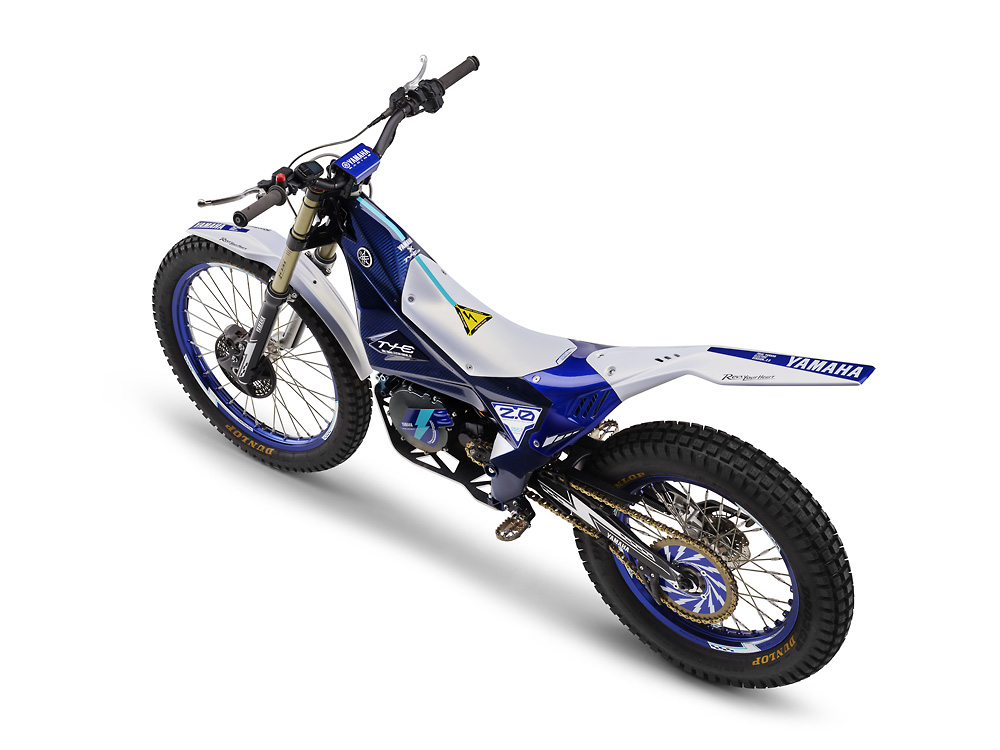
The TY-E 2.0 electric trials bike (photo shows 2.0 version from 2022)
Seeking to approach achieving carbon neutrality from the angle of “fun,” the TY-E’s development theme is “FUN × EV,” and in order to offer fun that surpasses ICEs by taking advantage of the unique traits of electric vehicles, the engineers spent countless hours on detailed refinements and repeated trial-and-error. And upon entering the All Japan Trial Championship in 2023 with the updated TY-E 2.1 version, the project team was restructured from the ground up to switch its focus to creating an EV with control and handling characteristics surpassing its ICE competition. Determined to use the latest technologies and make continuous improvements along the way, the team set a goal to reach in three years: prove the TY-E in the unforgiving world of competition by claiming the 2025 All Japan Trial Championship title. This would effectively accelerate the bike’s development.
The evolution from the first prototype to the TY-E 2.0 entailed a complete redesign of principal components, including an all-new composite monocoque frame, a higher-performance electric powertrain with more refined mechanisms and electronic control programming, and a newly developed lightweight battery boasting approx. 2.5 times greater capacity.
Through its outings in real competition conditions, the TY-E was given targeted modifications and enhancements that led to versions 2.1 and 2.2. In 2024, the bike received a major update that improved it across the board, resulting in the TY-E 3.0. In 2025, the project team did what they set out to achieve—the TY-E became the first electric trials bike to ever win the All Japan Trial Championship title.
The objective for the R&D with the TY-E project was to acquire various relevant technologies, knowledge, and know-how needed for propagating electric motorcycles. Additionally, the demanding testing environment of real competition and the goal of claiming the top prize in a largely unknown field forced the team of engineers to broaden their approaches and viewpoints, make difficult decisions, and adapt as necessary. The frequency and speed of events that triggered these processes were instrumental in forging the skills and spirit of the engineers along the way.
Yamaha Motor’s years of electric trial bike R&D culminated in a complete and refined machine, but that was not all that was gained through the TY-E project. Even if powertrains and the technologies making them possible transform into something different, the fun people feel from personal mobility must remain. Meeting the expectations for carbon-neutral mobility that is still fun is something Yamaha Motor must strive for—and is that not the kind of value technology has the power to create? The TY-E R&D project can be credited with bringing greater clarity to Yamaha’s understanding and future vision for electric vehicles.
TY-E Technologies
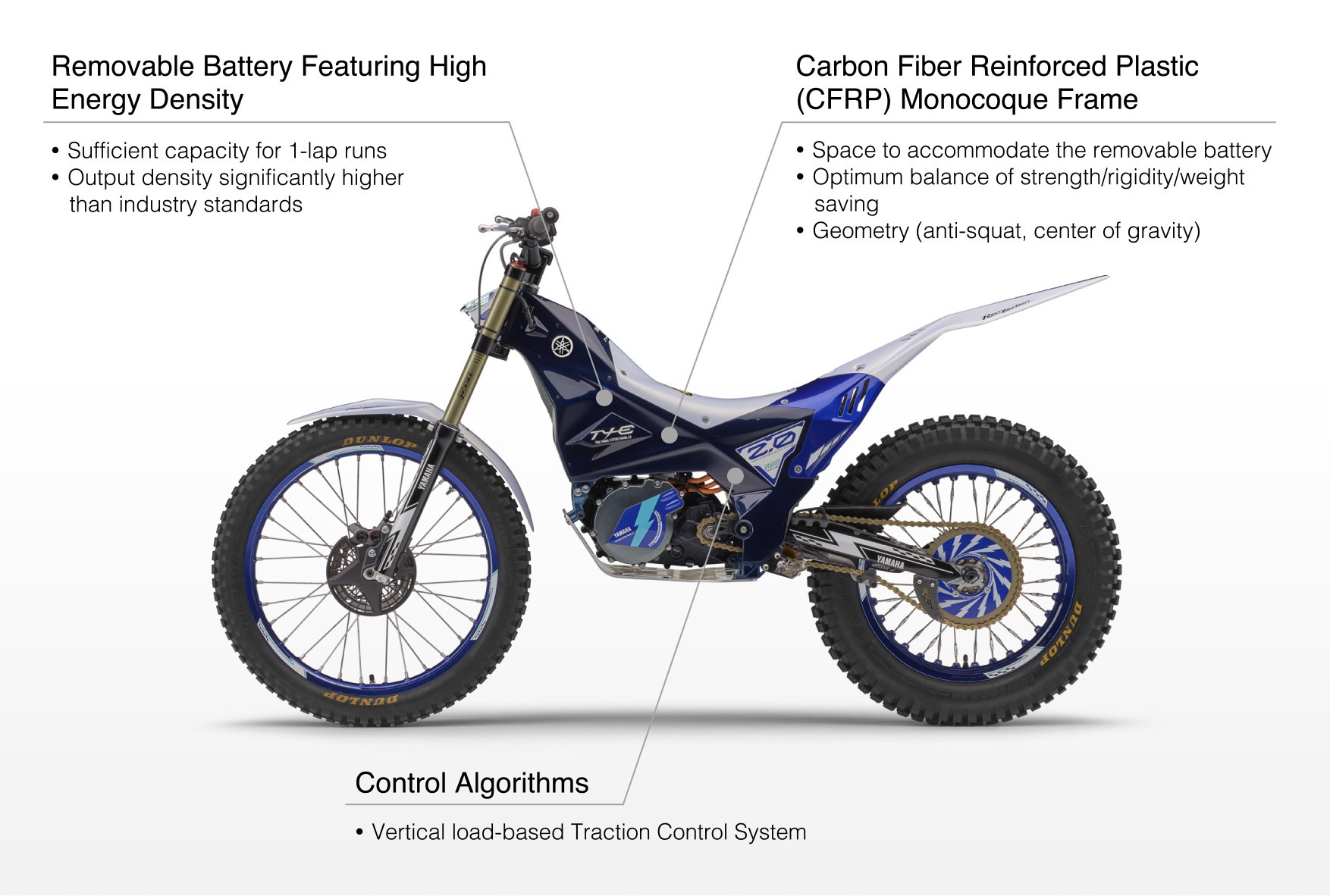
Removable Battery Featuring High Energy Density
To tailor the battery for use in a trials motorcycle, where lightweight and compactness are paramount, the chief focus for its technological development was to achieve an output density higher than conventional removable batteries, and its standout feature is the volumetric density which is noticeably higher than the average removable battery.
With the first-generation TY-E in 2018, increasing output density was prioritized and the design sacrificed energy density to achieve that task. But the newly developed battery for the TY-E 2.0 retains the same high output density while also achieving an energy density of a considerably high level for a typical removable battery.
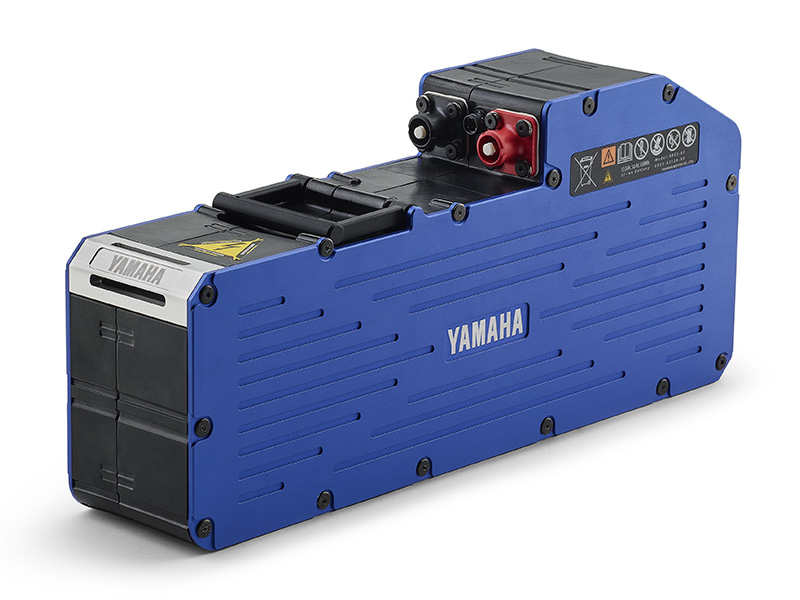
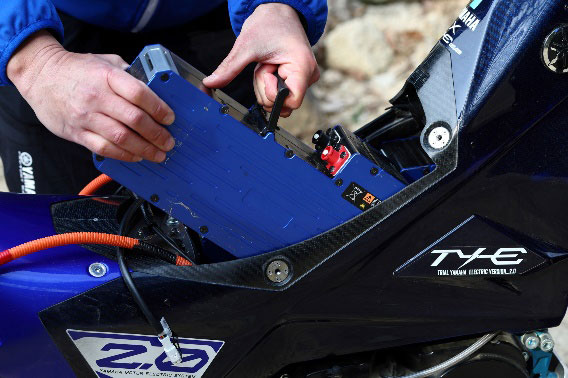
The TY-E 2.0’s removable battery
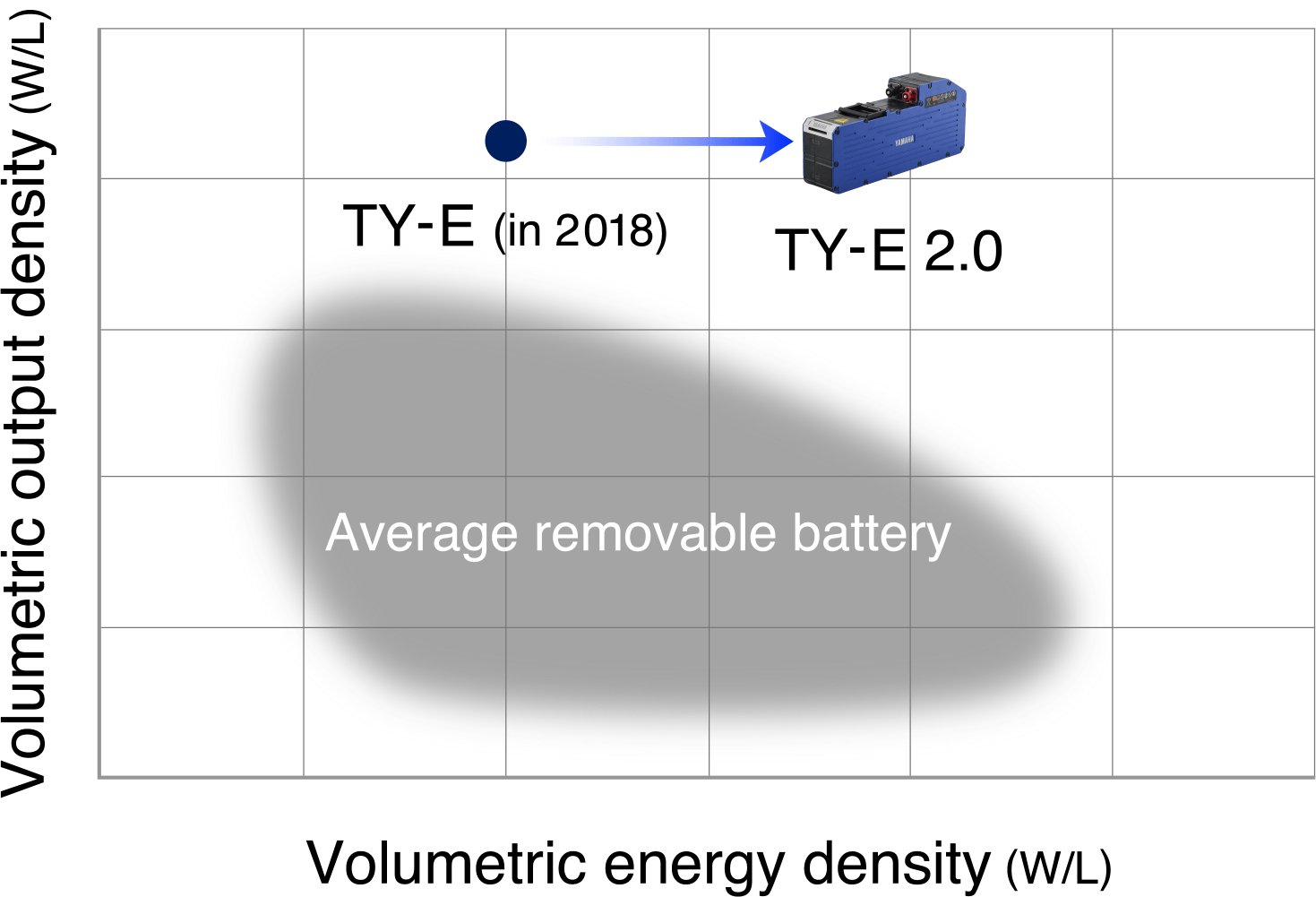
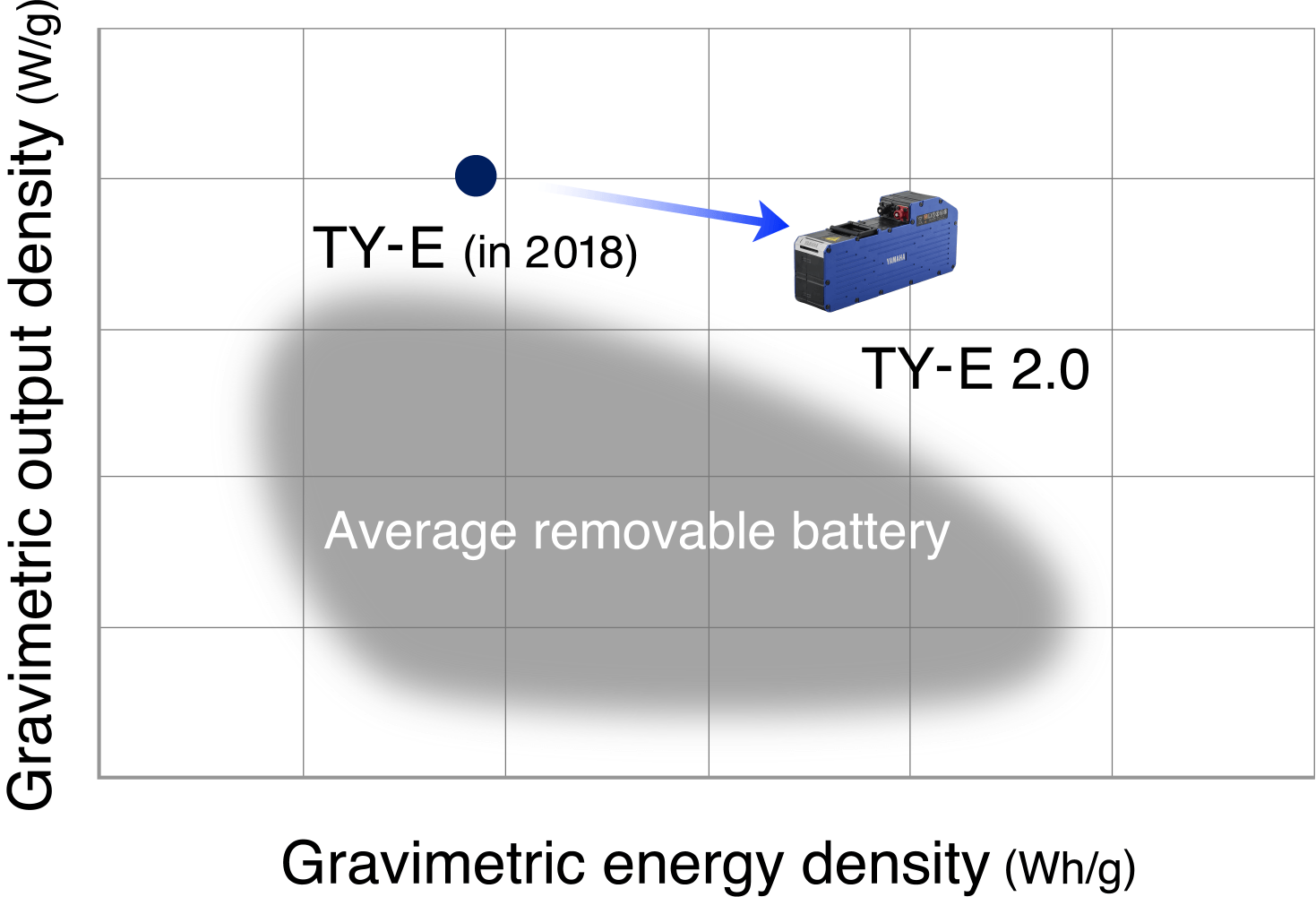
Battery advances from the first-generation TY-E in 2018 to the TY-E 2.0
A Powertrain Combining Electric and Mechanical Components
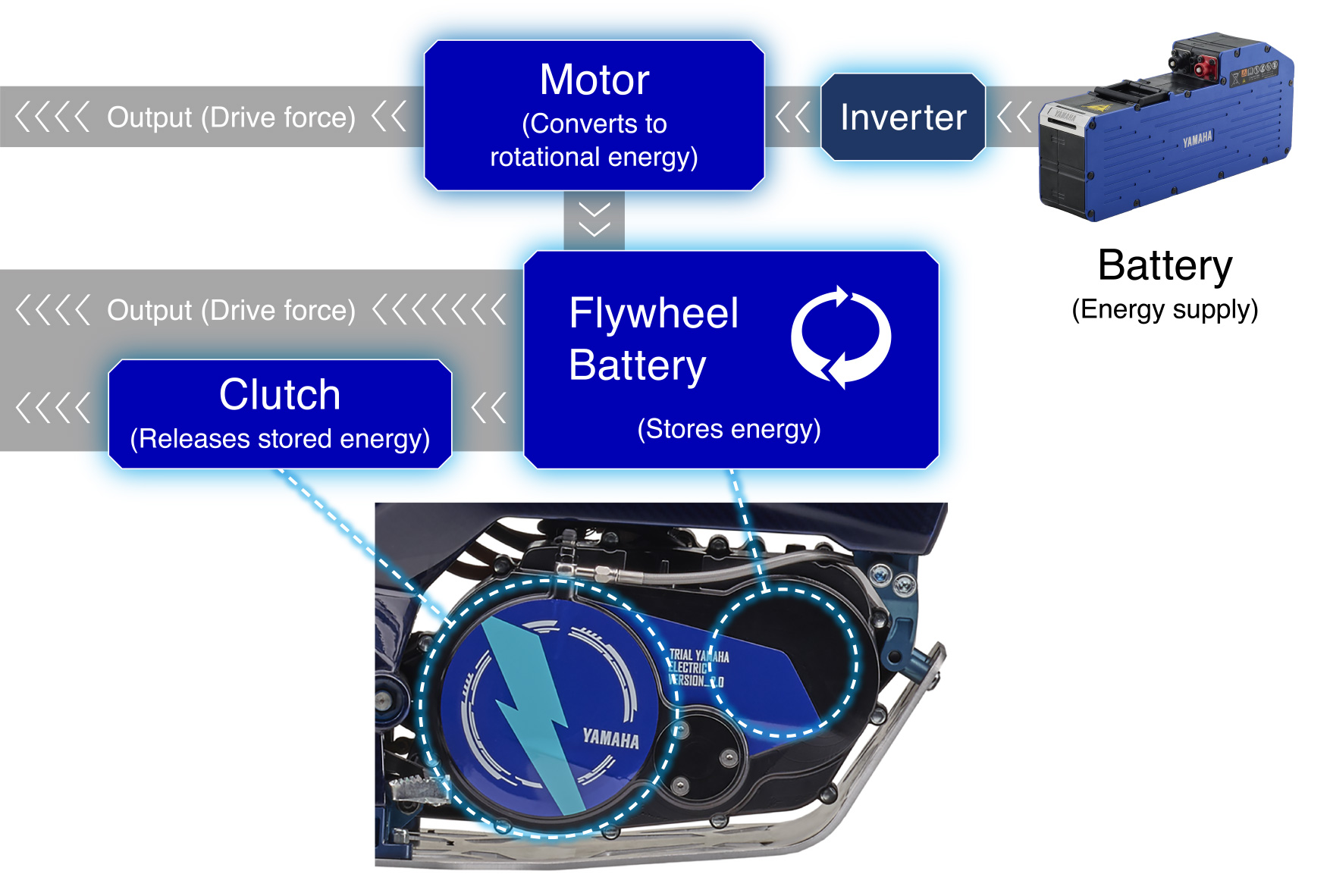
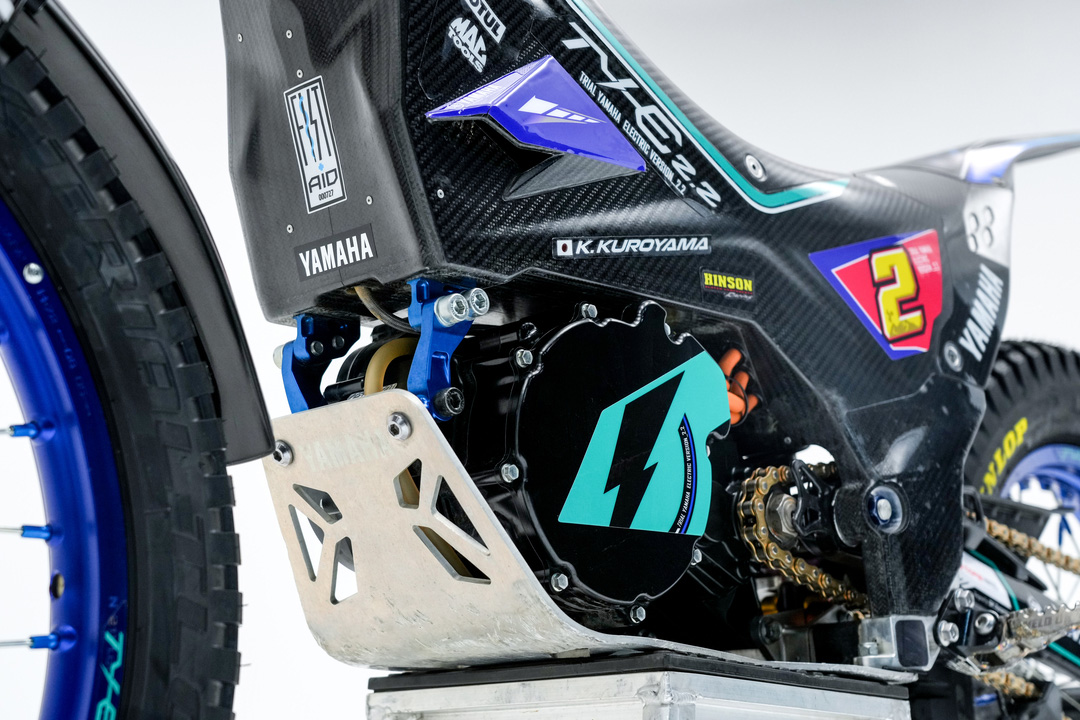
The high-density coils in the TY-E’s motor are how it achieves not only high rpm and high output numbers but also a lightweight and compact shape. Additionally, another feature of the TY-E’s powertrain is its mechanical clutch and flywheel—two items unneeded by typical EVs—that complement the motor’s high output, a trait required in trials competition.
The mechanical clutch has a lightweight construction that also works well to transmit the high output density of the motor, and was adopted to raise efficiency when converting the motor’s rotational energy into drive force.
The energy stored by the flywheel is far smaller than the energy supplied from the battery and is also instantly consumed, but the team actually turned their eyes to that very instant, believing that it held the key to extracting a high degree of drive force not present in a typical battery/motor combination. To provide the lightness and instant power on tap needed in a trials bike, the TY-E employs this flywheel/battery combination.
Note: With a conventional EV, the energy stored in the battery is directed through an inverter and motor to convert it into rotational energy, which alone is then used to drive the wheels. A clutch—which cuts off or transmits drive force—and a flywheel for stabilizing rotation are mechanisms generally considered unnecessary with EVs and are typically used by vehicles using ICEs and manual transmissions. However, trials competition requires riders to repeatedly ascend steep terrain; launch, accelerate, and stop the bike; and precisely control and maintain vehicle posture. In order to gain the energy density (volume/weight of the fuel source vs. the energy produced), torque characteristics, and control of drive traction needed for that in trials, a mechanical clutch and flywheel battery were adopted on the TY-E. While this goes against the ethos of trials bikes needing to be extremely lightweight, they are essential technologies for electrifying a trials bike as well as part of the “fun” central to the TY-E’s concept.
Carbon Fiber Reinforced Plastic (CFRP) Monocoque Frame
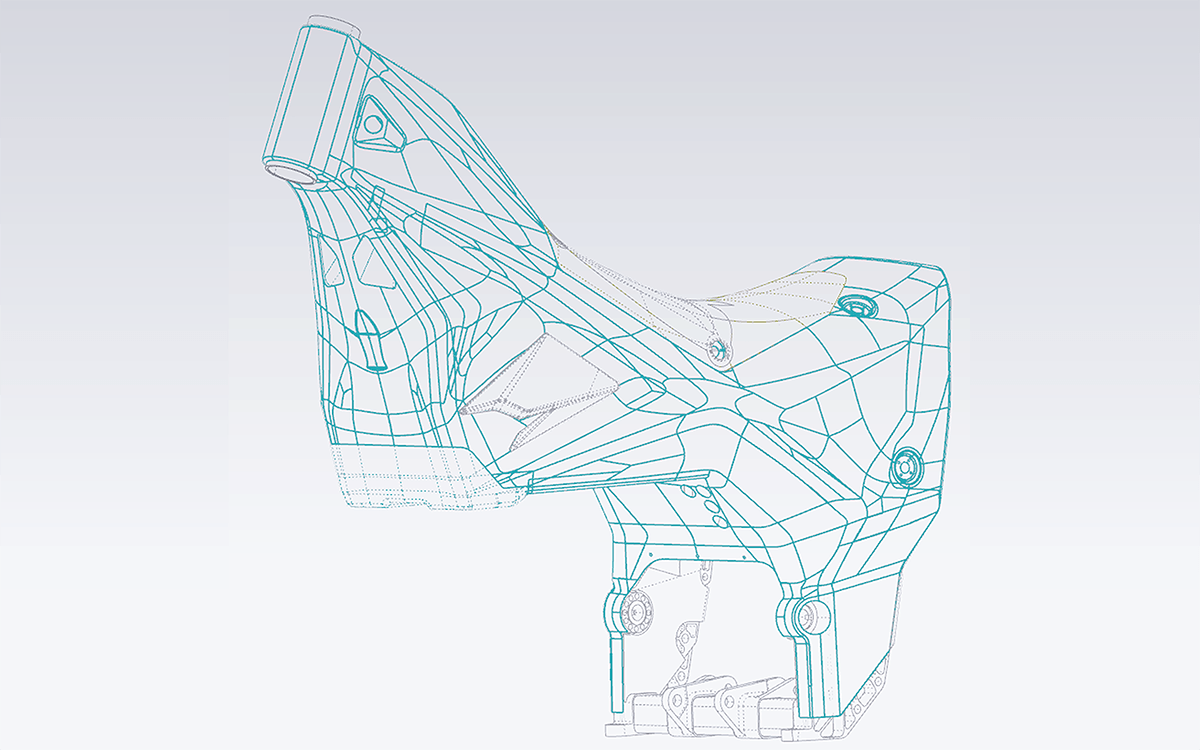
The monocoque design and carbon fiber composites for the frame are another technological feature of the TY-E. It is a significant departure from trials motorcycles with internal combustion engines, as this design results in a chassis weight and frame rigidity balance optimized for an electric motorcycle—one that also reduces overall weight. The frame from the TY-E 2.0 onward carries on and evolves the same basic frame concept of the original: to heighten longitudinal and torsional rigidity while keeping lateral rigidity low. By making the battery more compact, the part of the frame housing it—the front and top—was made simpler and slimmer, creating a chassis ideal for trials that does not obstruct the rider's movements.
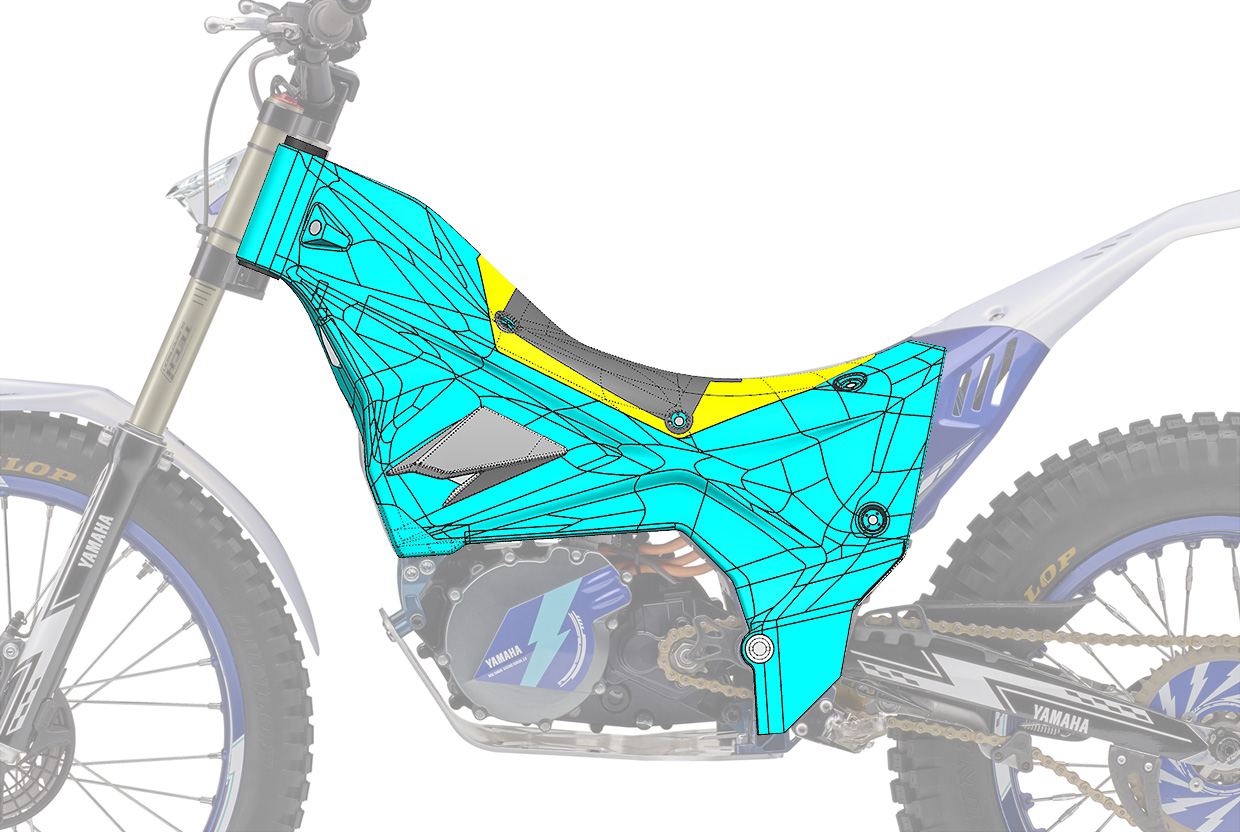
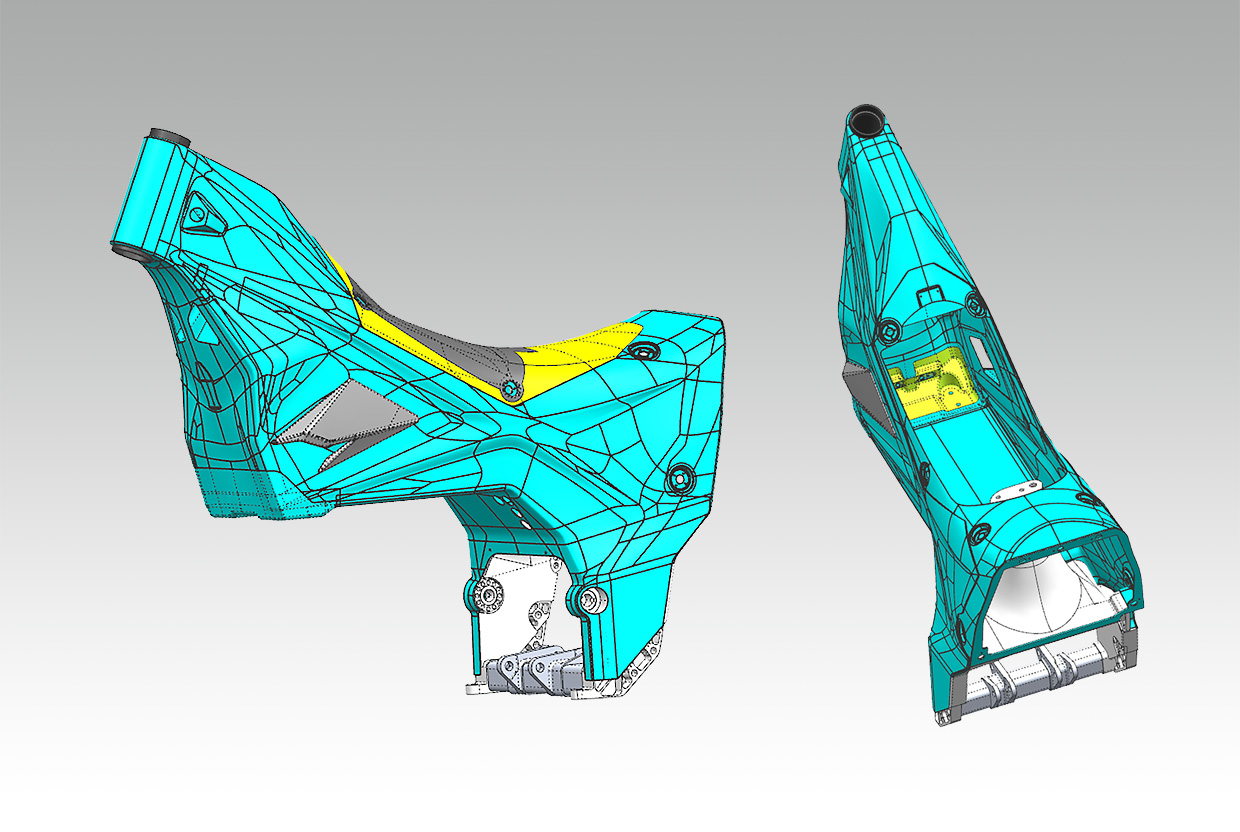
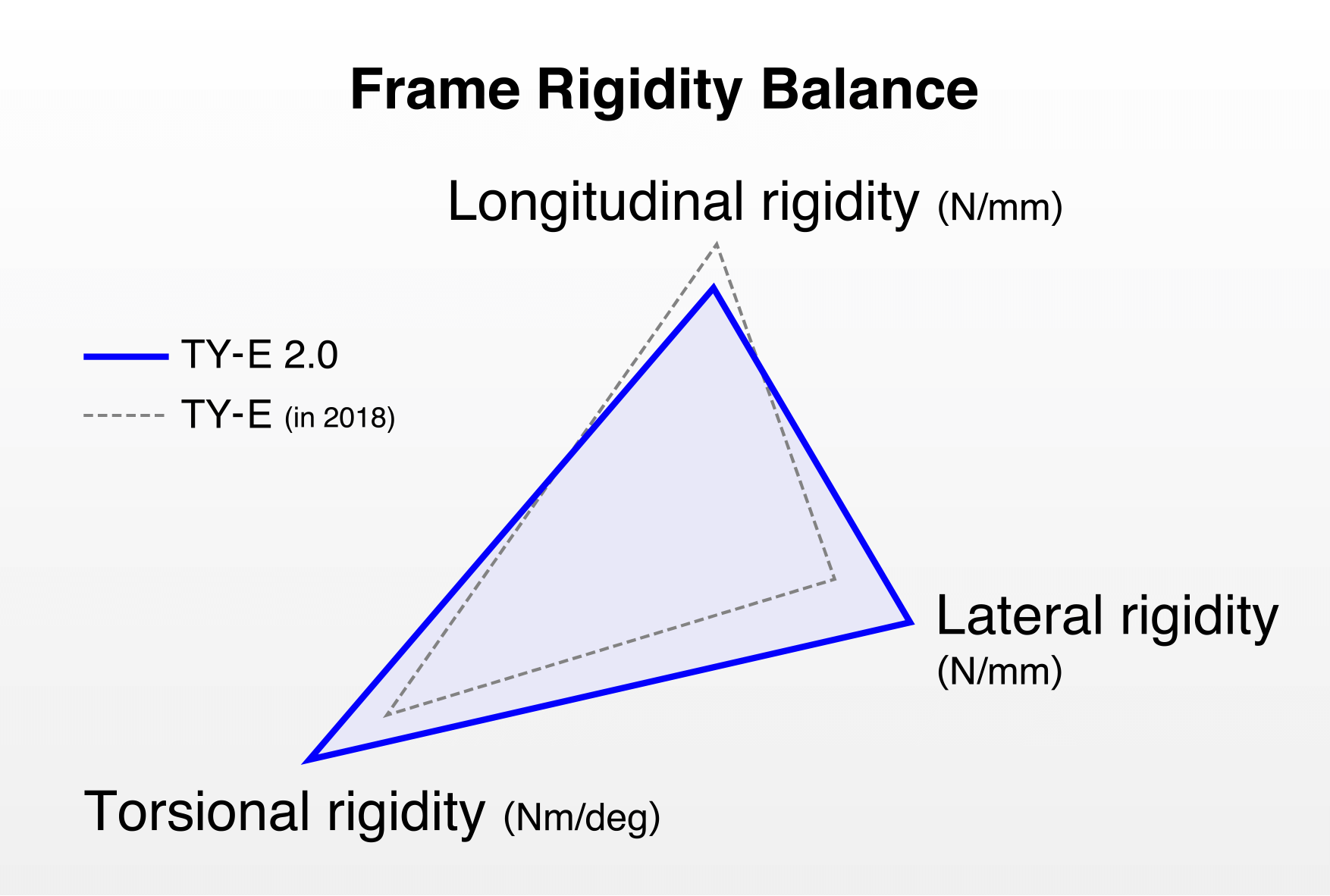
The monocoque frame is designed with the space to accommodate the removable battery while also ensuring sufficient strength and striking the right balance for rigidity and weight across the entire chassis.
TY-E 3.0(2024–)