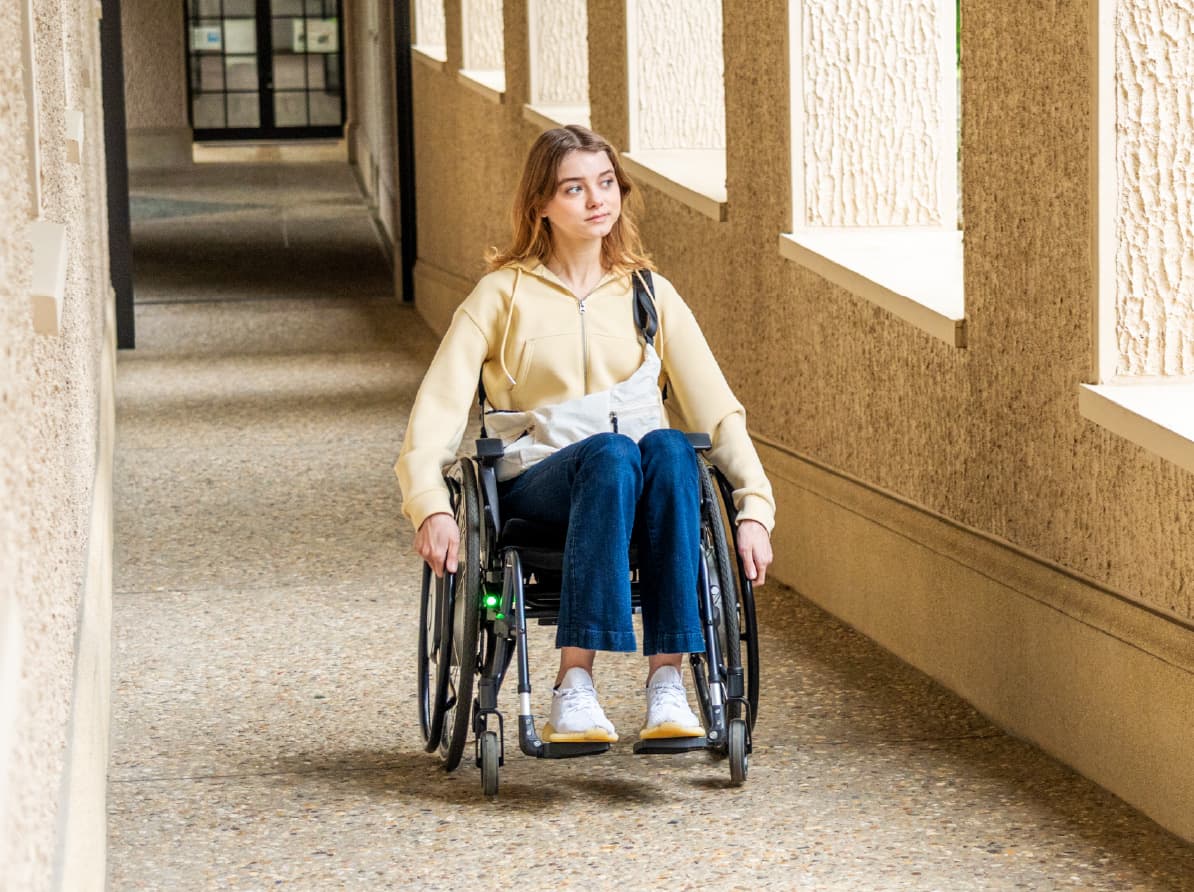
Technologies
The Technology in the JWG-1 (Wheelchair Electric Power Unit)
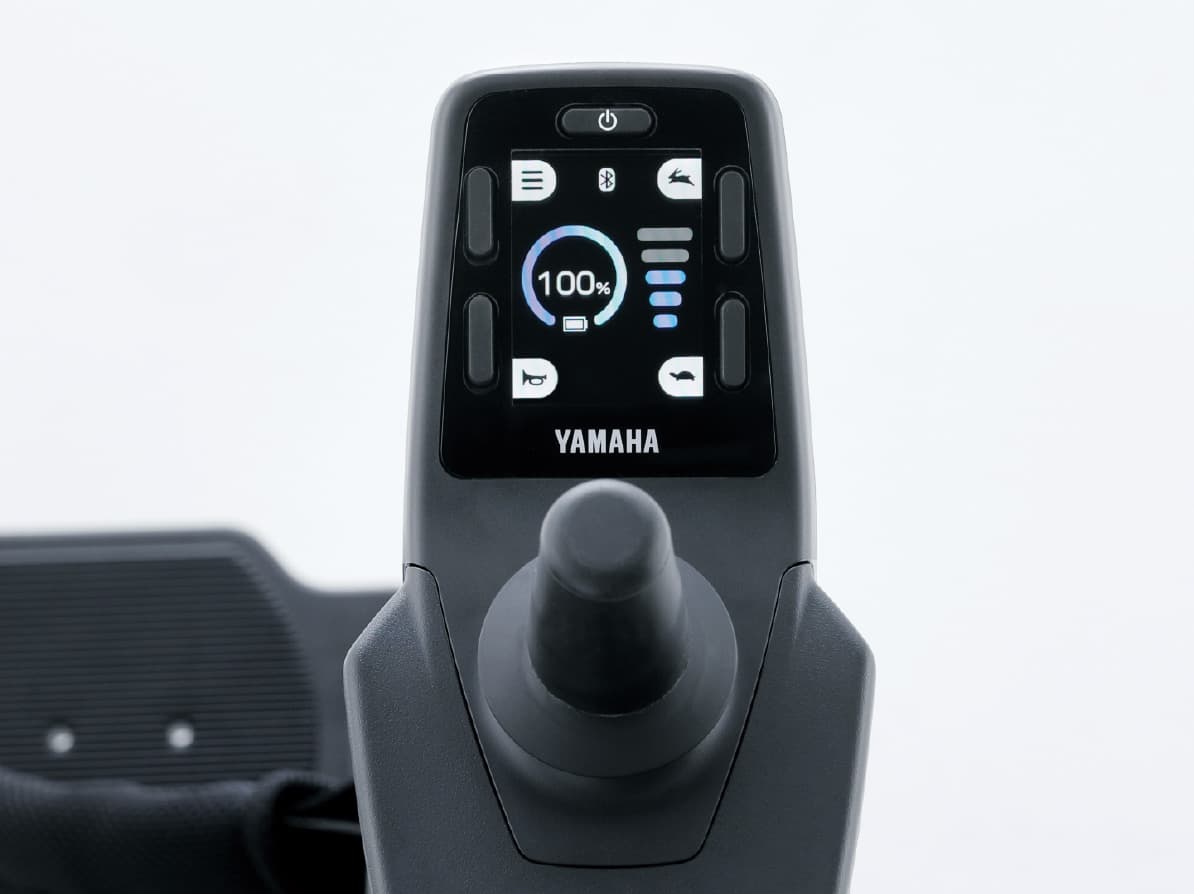
The JWG-1 uses two motors to power the two drive wheels. The speed of each wheel is controlled independently in order to move forward, in reverse, or turn via a single joystick. Each wheel is equipped with a rotation sensor for feedback control, enabling not only crawling speeds but also powerful, stable movements. The agility of its turns and the smooth, low-shock ride makes operating one easy even for beginners.
All of the JWG-1’s functions—including the processing of joystick inputs and feedback from the drive wheels—are digitally controlled by the CPU housed inside the main controller. The control system has been meticulously programmed based on data and feedback gathered from consumer testing and other field tests, and achieves exceptionally smooth performance while ensuring good low-speed operability of the joystick when in confined spaces or indoors; when starting off (acceleration/deceleration) or making turns; and to account for users with limited upper limb support.
The Technology in the JWX-2 (Wheelchair Electric Power-Assist Unit)
With the JWX-2, Yamaha used the same approach as the JWG-1 in terms of making it easy to fit the wheels to a wheelchair and keeping the design lightweight and compact. However, adapting Yamaha’s Power Assist System for a wheelchair was an unprecedented undertaking, so a variety of original ideas and technologies were incorporated to make the final product practical in real-world use.
The Power Assist System (PAS) in the JWX-2
The Power Assist System (PAS) used in the JWX-2 combines the force applied to the wheelchair’s handrims with the assistive power generated in response by the electric motors to make the wheelchair easier to propel. In short, Yamaha’s electric power-assist units for wheelchairs adapt the technology originally pioneered by its eBikes.
PAS works by having the computer instantly calculate the optimal level of assistive power for the current conditions based on the force sent to the handrims and data about the current traveling speed. The electric motors then send that assistive power to the drive wheels, thereby reducing the load required by the user to move the handrims. In high-load situations—such as starting from a stop or going uphill—greater assist force is automatically provided.
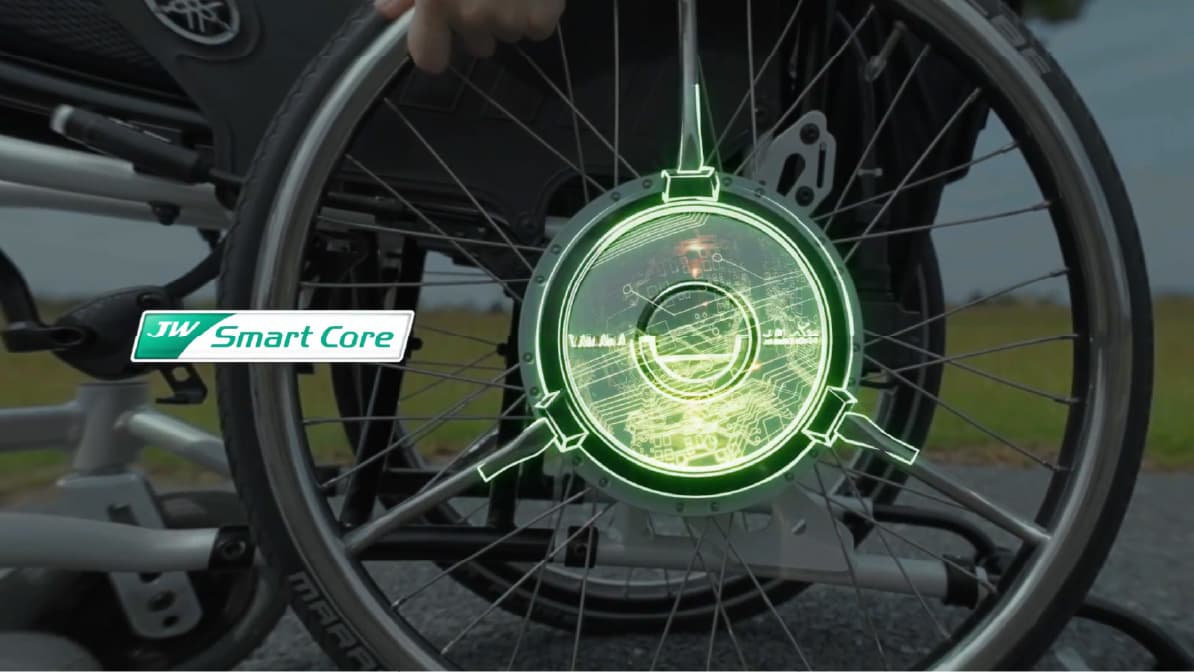
Whereas a bicycle has a single drive wheel, the JWX-2 has independent systems for the left and right wheels. Each wheel’s computer controls its own wheel while also exchanging the necessary data with the computer for the opposite wheel.
Virtual Coasting
Unlike bicycles, moving a wheelchair involves intermittent strokes of the handrims. While the wheelchair will continue to roll from inertia on a flat surface when the user lets go to regrip the handrims, on an uphill slope, the wheelchair can stop and roll backward when no force is actively being applied to the handrims. This makes uphill travel less stable.
To address this, the JWX-2 uses electronic control technology to create “virtual coasting.” In other words, when force is applied to the handrims by the user, the motors provide assistive power. If no further force is applied afterwards, the system maintains that initial output and then gradually reduces the assistive power over time.
This Virtual Coasting feature delivers smooth travel on flat roads while preventing rollback on uphill inclines, providing natural and confidence-inspiring performance.